Alishan National Forest Recreation Area: Tickets & Trails

Alishan hardly needs an introduction, but the moment you sit down to plan an actual day there, the questions pile up. How do tickets work? There are three forest train lines — which one do you take? Is half a day enough? This piece walks the park once, in photos: out from Alishan Station on the train, along the boardwalks through the giant tree forest, then where to stock up on the mountain and how to get up here without a car.
Tickets, Opening Hours and What to Know Before You Go
The park is open 24 hours a day, all year round, which doesn’t mean you can turn up whenever you like. Every facility and every railway branch line keeps its own operating hours, and the trails have no lighting after dark. In practice, almost everybody’s visit is those few daylight hours.
Rates as published by the Forestry and Nature Conservation Agency:
| Ticket | Price | Who it’s for |
|---|---|---|
| Full | NT$300 | General visitors |
| National full | NT$200 | Taiwanese visitors with ID |
| Concession | NT$150 | Students, children aged 7–12, etc. |
| Preferential | NT$10 | Children aged 3–6, seniors 65 and over, etc. |
| Parking | NT$100 per car | NT$20 per motorcycle |
These are the published rates as checked in August 2026; prices and discount conditions are as most recently published by the authorities. Bring your ID on the day — for Taiwanese visitors it’s a hundred dollars’ difference.
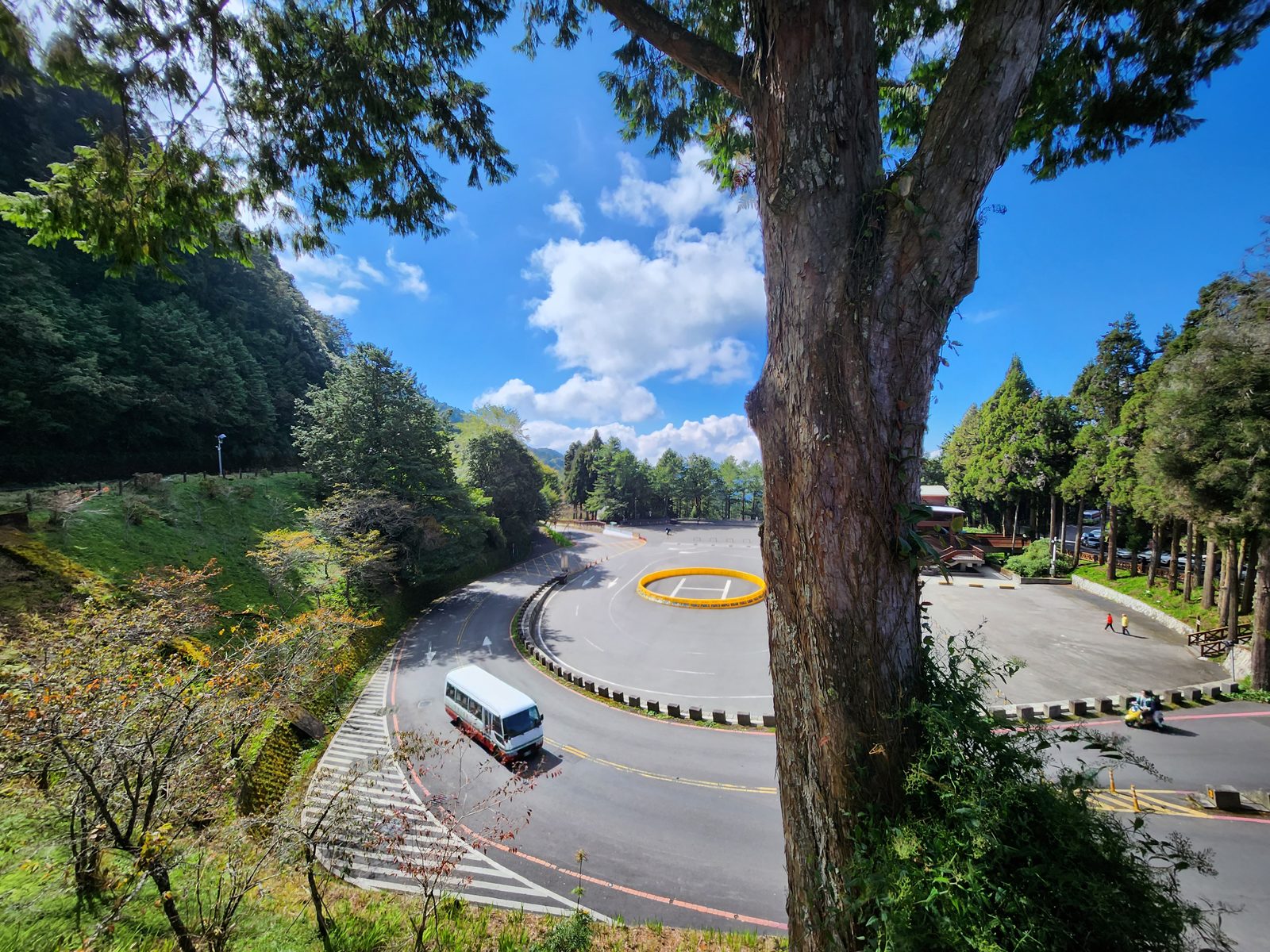
The car park sits below the station at the end of a U-shaped turning loop, with a yellow circle marking a helipad beside it. If you’re driving up, spaces go fast at weekends, so arriving early is the safer bet.
Alishan Station: All Three Branch Lines Start Here
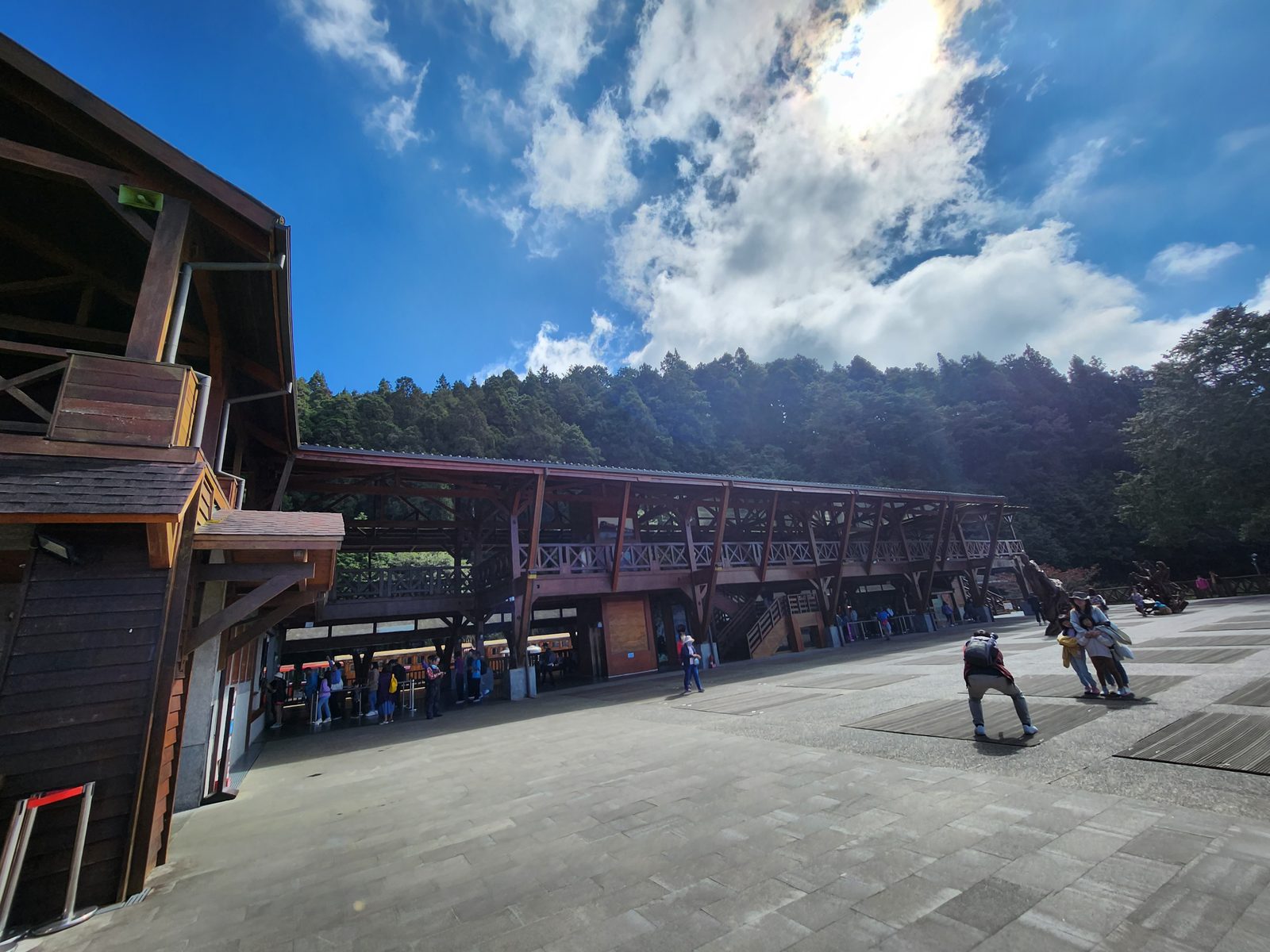
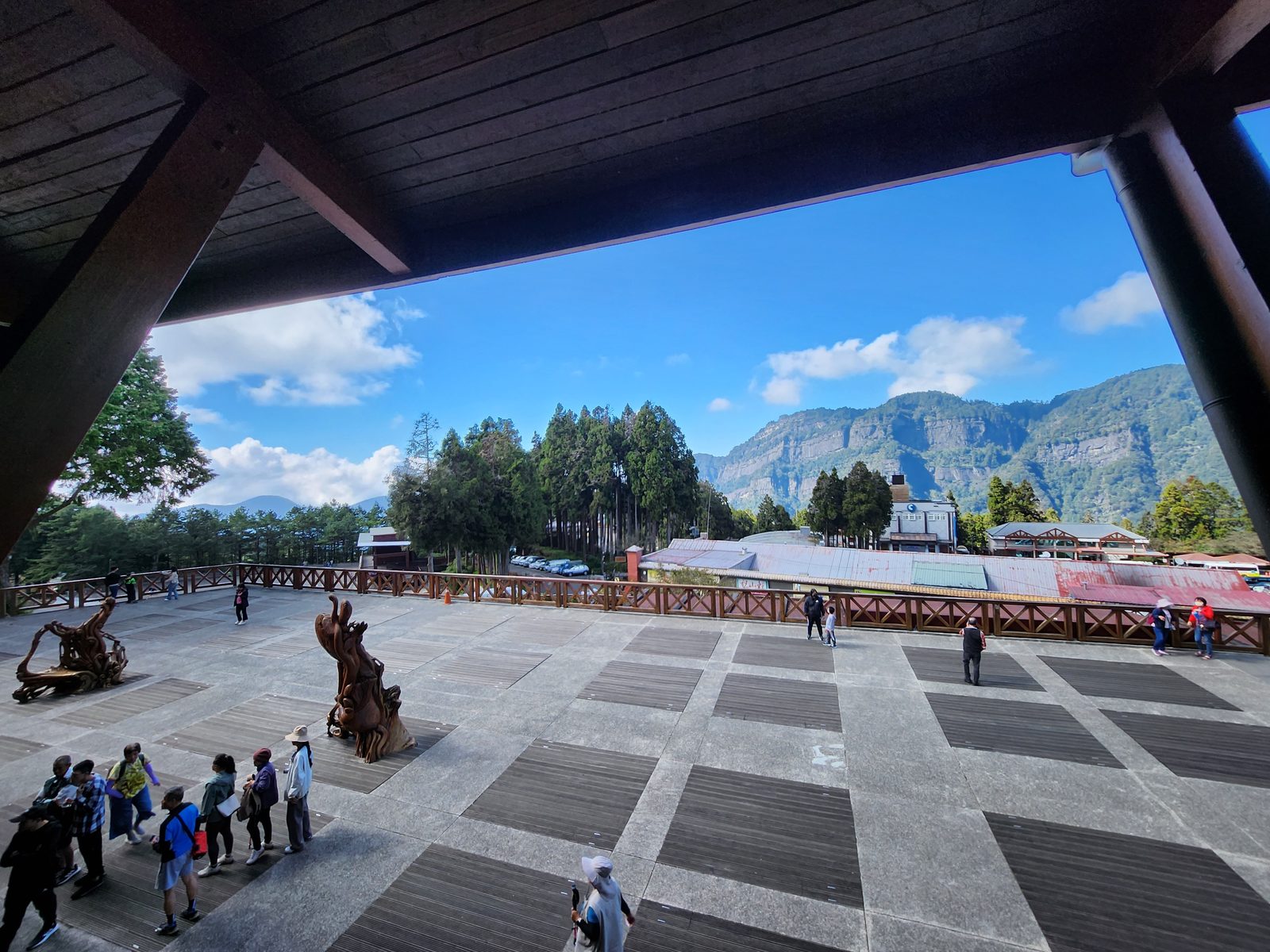
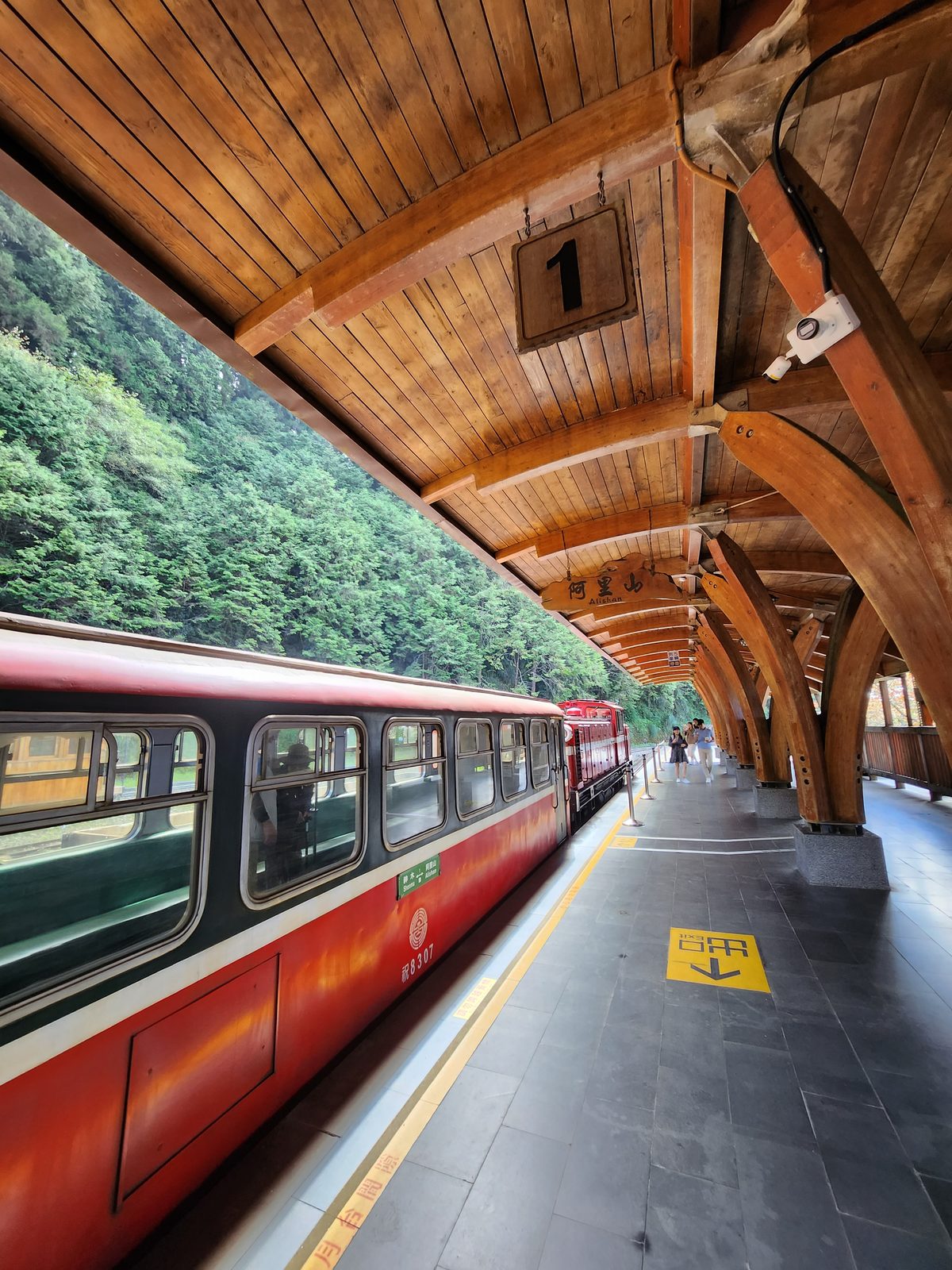
Three forest railway branch lines run inside the park — the Zhushan Line, the Shenmu Line and the Zhaoping Line — with their ticket gates side by side on the platform, each going its own way. The carved wooden “阿里山 Alishan” nameboard hanging from the platform beam is the easiest landmark here.
The board above the ticket window puts everything you need in one place: the routes and the running time between stations (Shenmu to Alishan 7 minutes, Alishan to Zhaoping 6 minutes), each line’s departure times, the fares, even a line of LED showing the current temperature. One more thing on that board deserves your attention — departures from Alishan Station run 8:30–16:30 (as posted on site). That’s the single most important number for planning your way back; once the last train has gone, you’re walking.
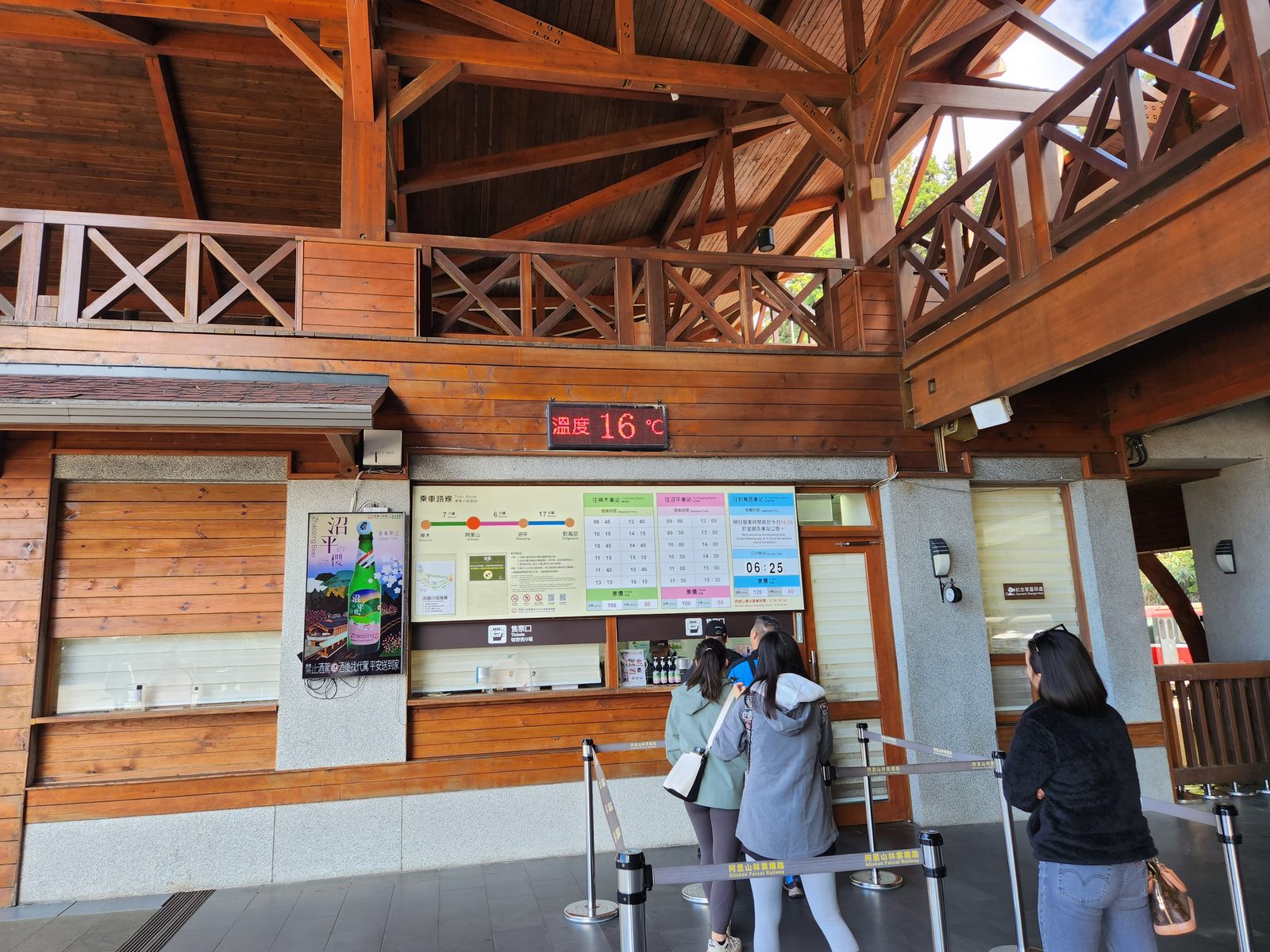
Current one-way fares on the branch lines (as published by the Alishan Forest Railway and Cultural Heritage Office):
| Branch line | One-way full | One-way concession | What the line is for |
|---|---|---|---|
| Zhushan Line | NT$150 | NT$75 | The sunrise run, departures shift with sunrise |
| Shenmu Line | NT$100 | NT$50 | Terminates at Shenmu Station |
| Zhaoping Line | NT$100 | NT$50 | Terminates at Zhaoping Station |
Zhushan Line departures are not fixed: times follow the day’s sunrise and only go up at the station and on the official website the afternoon before. So if the sunrise is what you came for, make a point of checking the next morning’s departure time the evening before — don’t head out on an old timetable you found online.
What Riding the Forest Train Is Actually Like
The little red train is small, the carriages finished in timber, and it runs slowly enough to properly watch the world go by. The best part is the small stops along the way — the platform is a stretch of planking in the forest, no station building, no fences, a yellow point lever visible beside the track. The train stops, everyone steps down, and you’re standing among tall conifers.
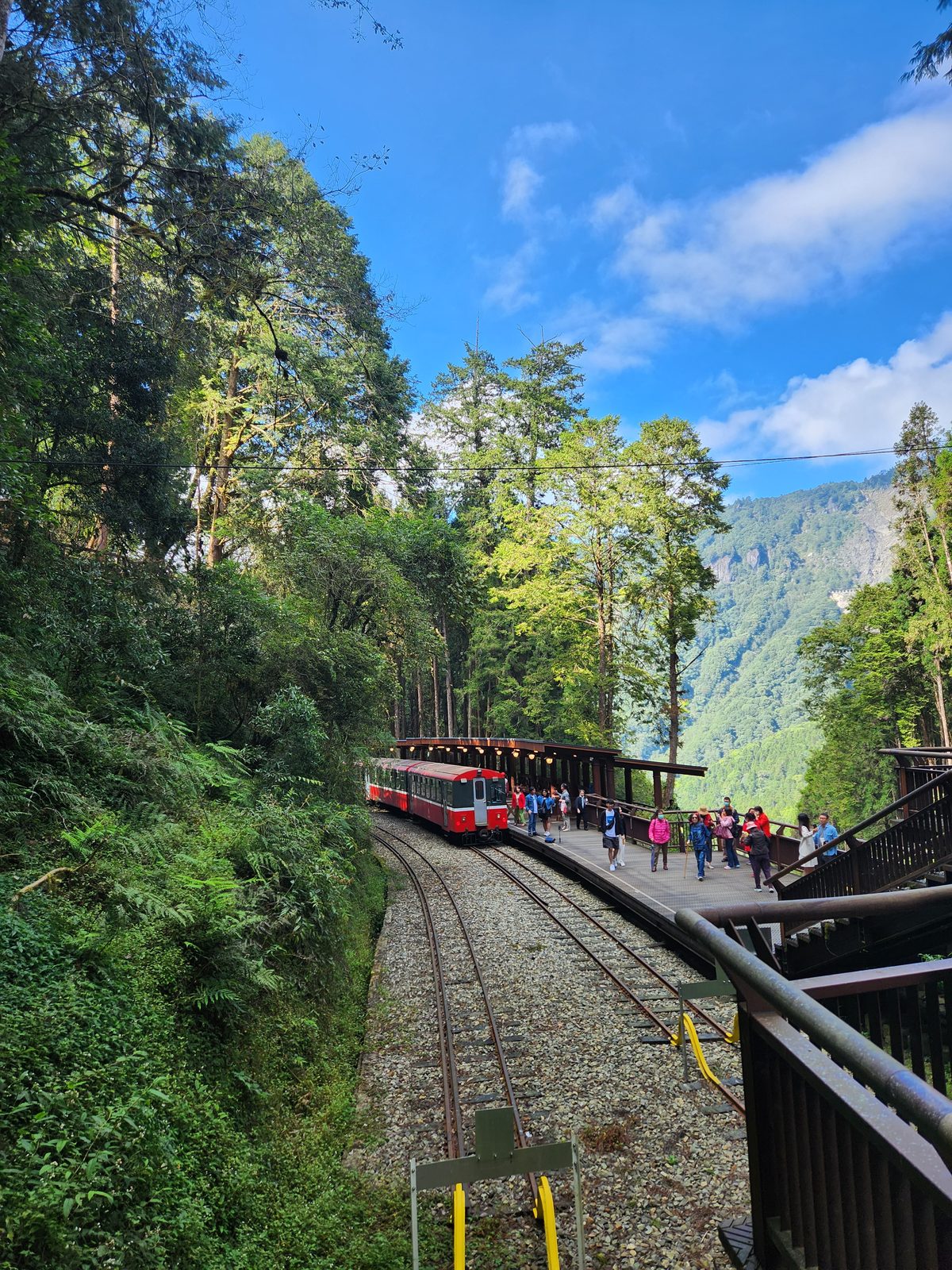
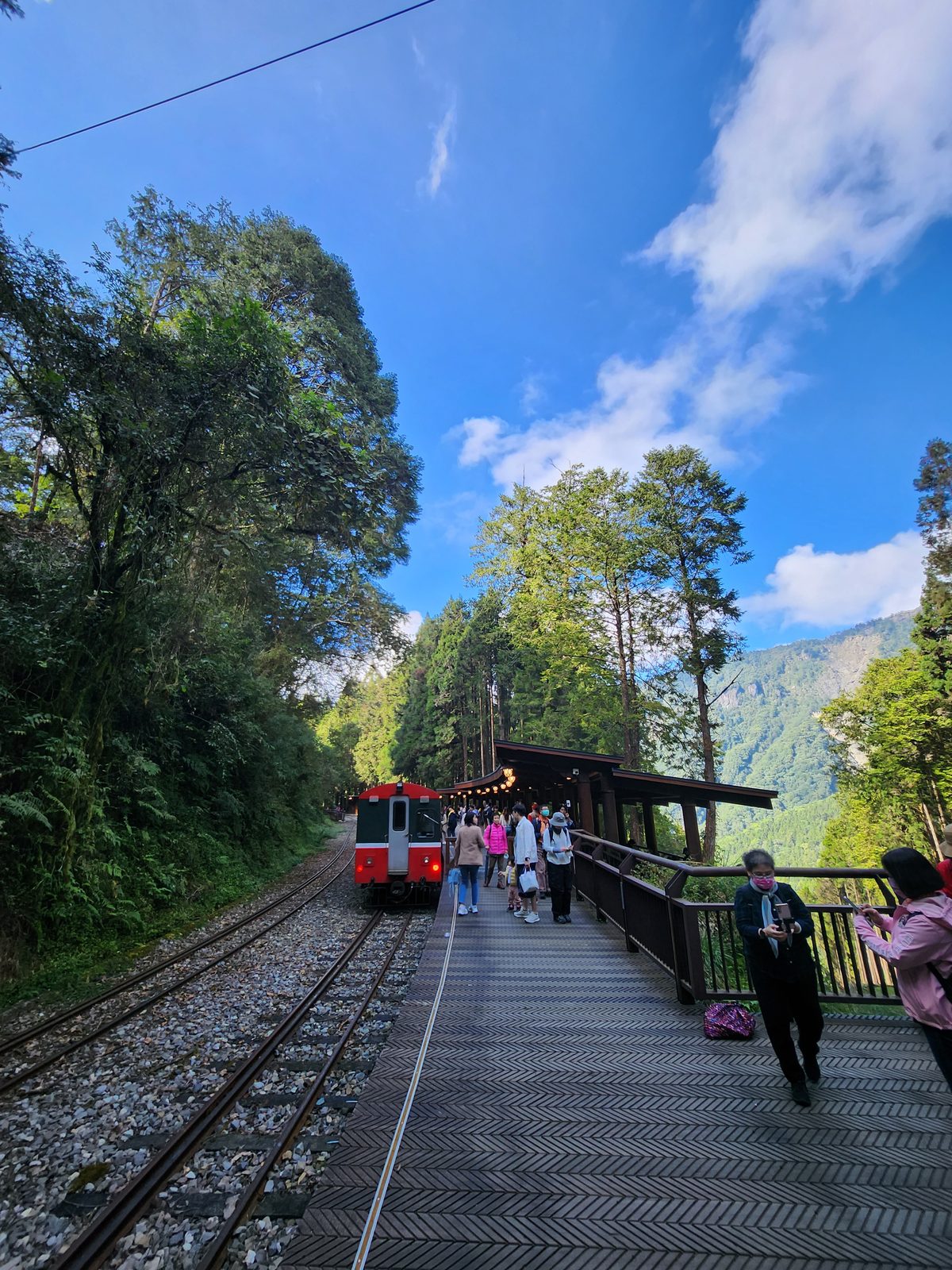
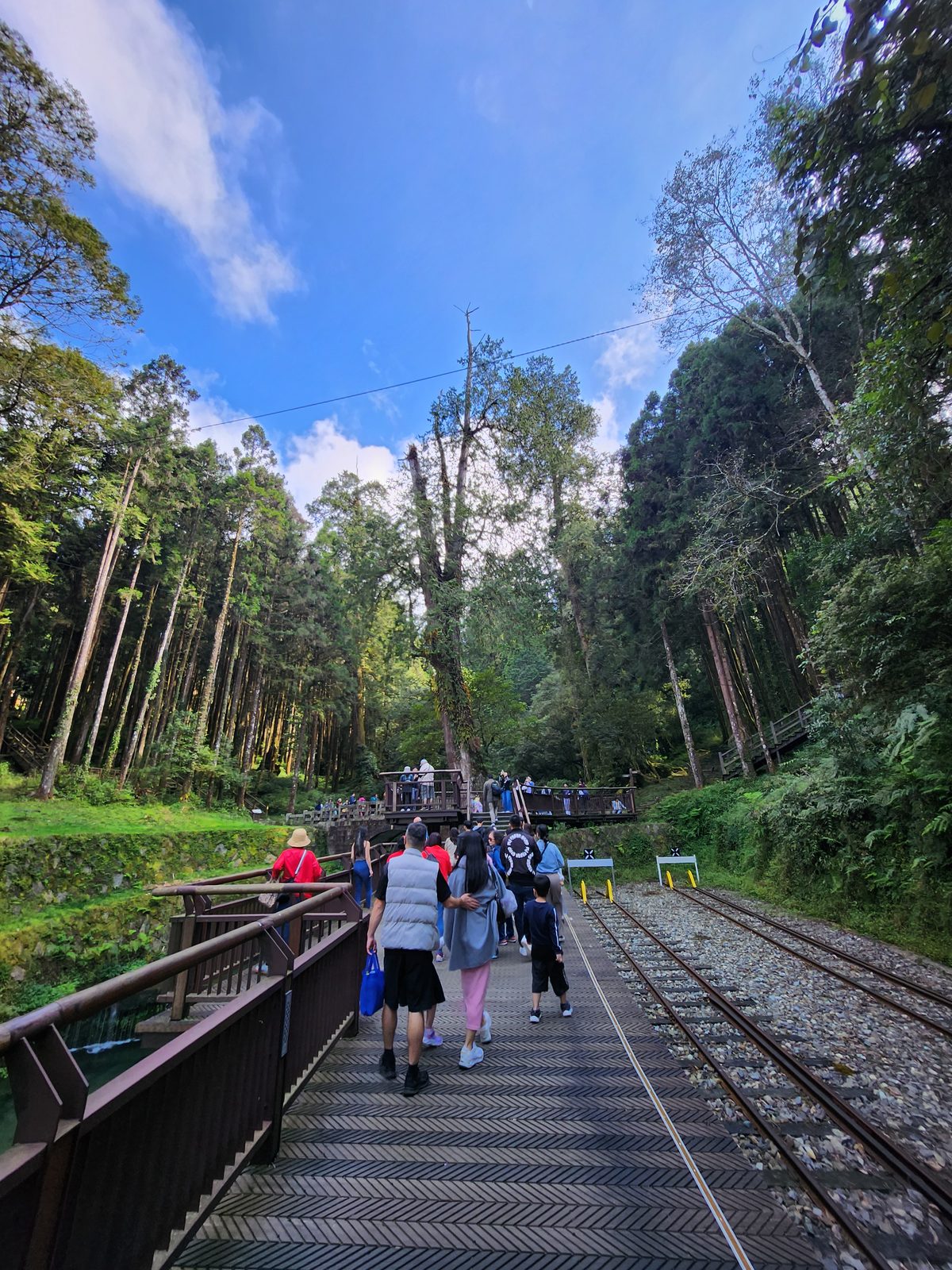
Should you ride it? My advice is to take at least one leg. There’s a fair bit of height difference across the park, and walking it all costs you. Riding up and then walking the trails back down is the combination that saves the most energy without missing the scenery. Tickets sell out in high season, so once you’re through the gate, go and check the departures and buy your ticket first, then go and look at everything else.
The Giant Trees and the Boardwalks: This Is the Main Event
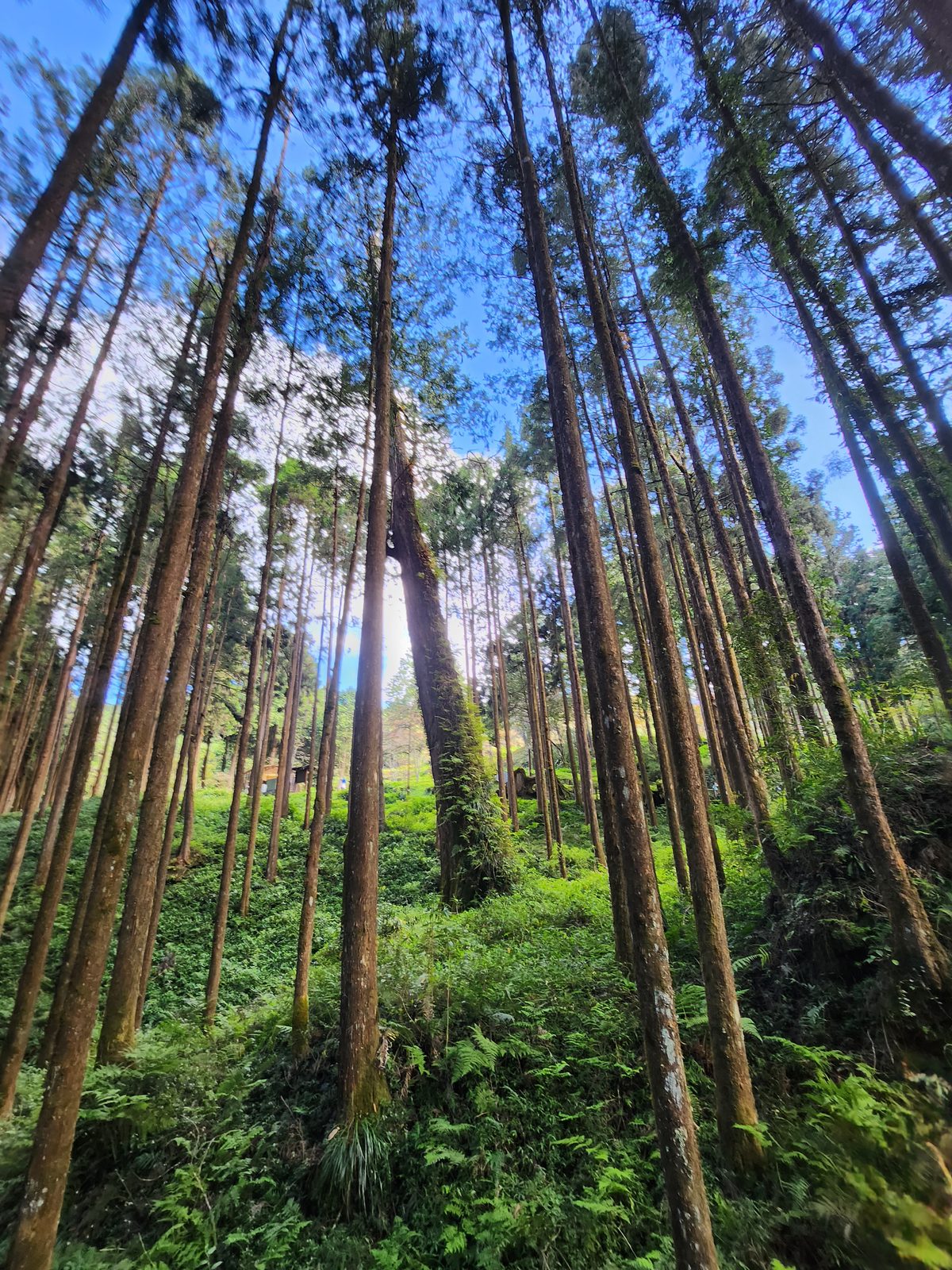
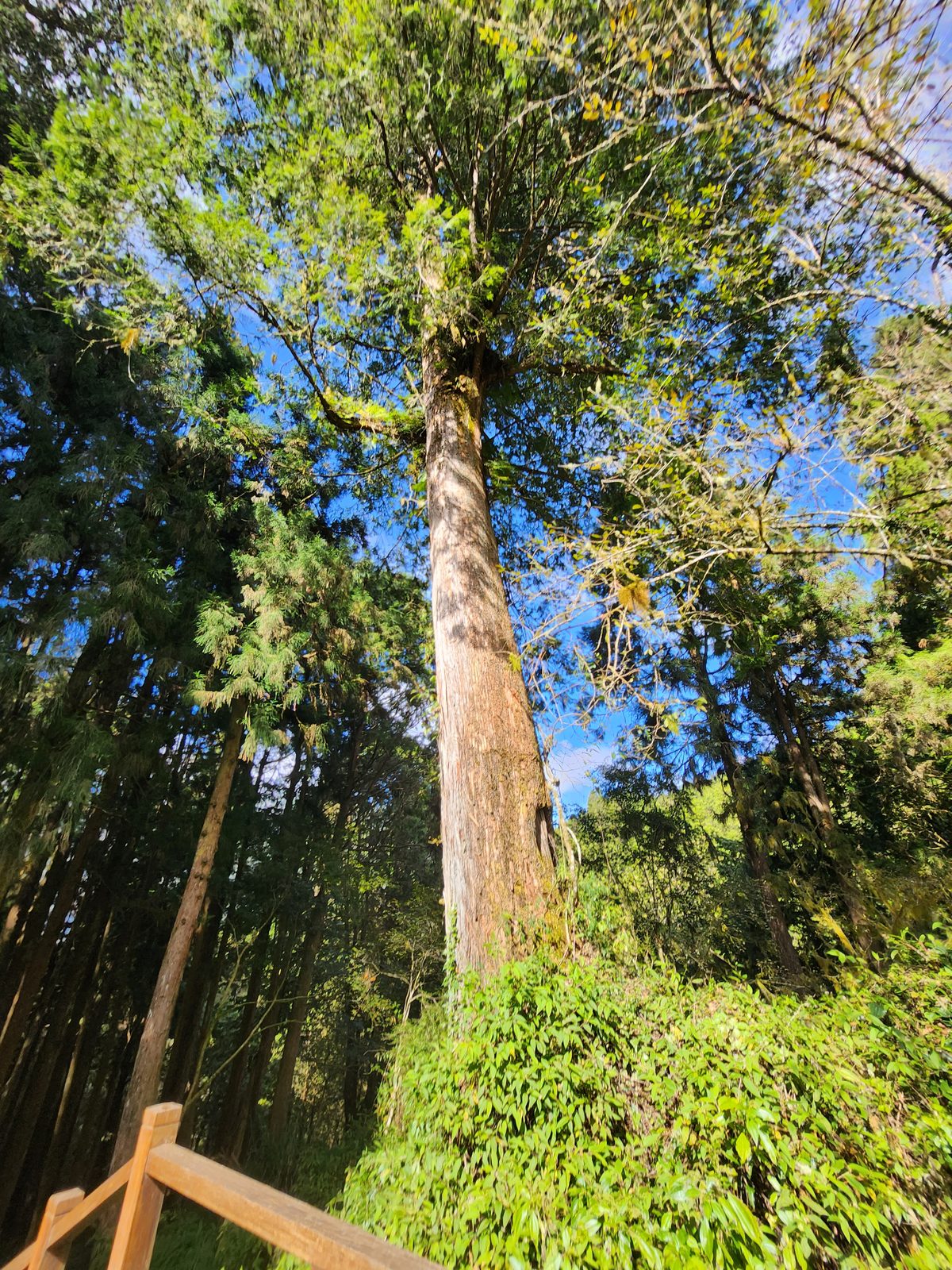
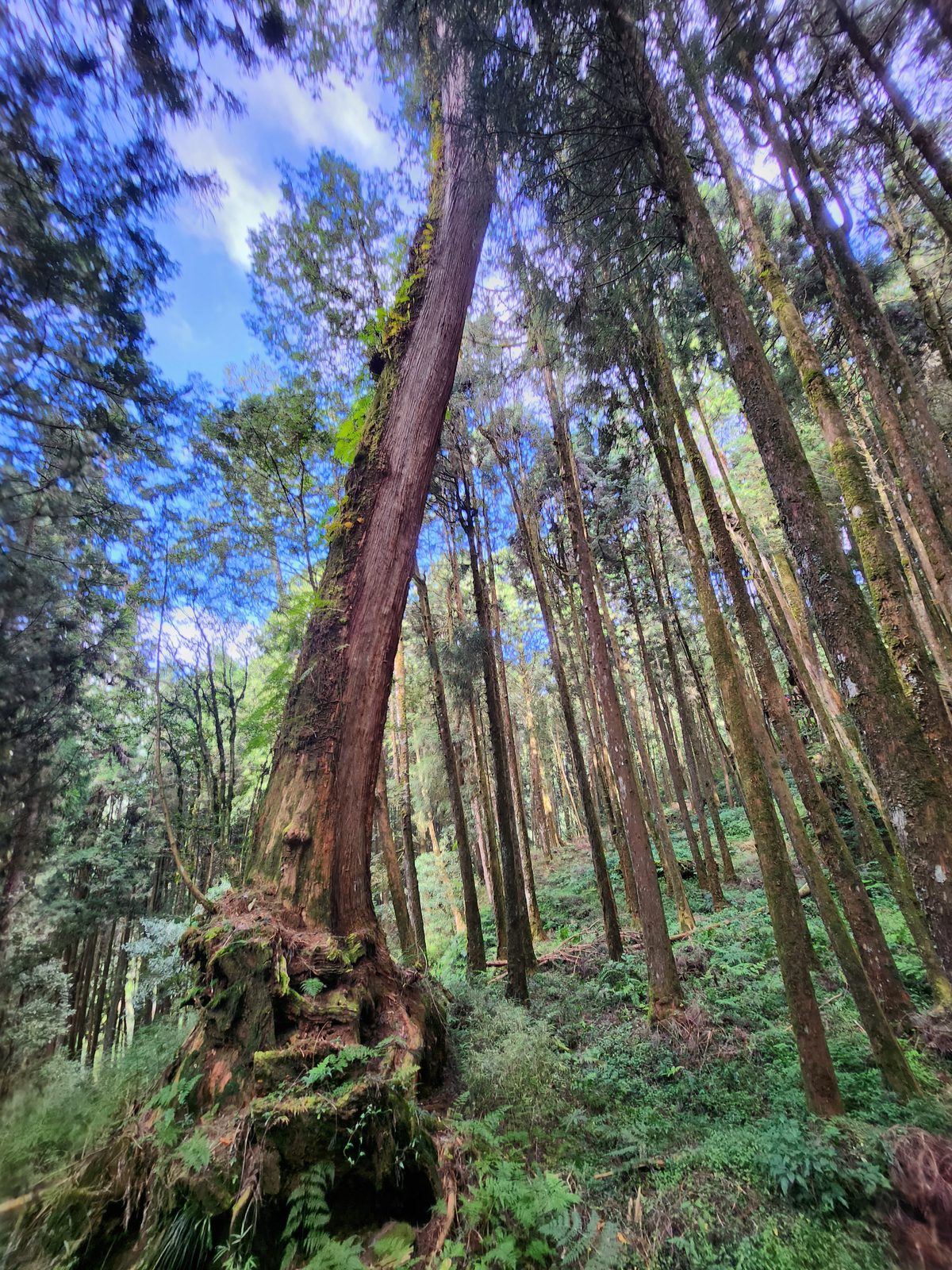
The train is only transport — the substance of Alishan is on the trails. The trail network is mostly boardwalk and stone steps, running through a tall coniferous plantation and on into older giant trees. The gradient isn’t steep, but there are a lot of stairs and you will still be breathing hard; you’re at altitude, and your fitness at sea level doesn’t convert directly.
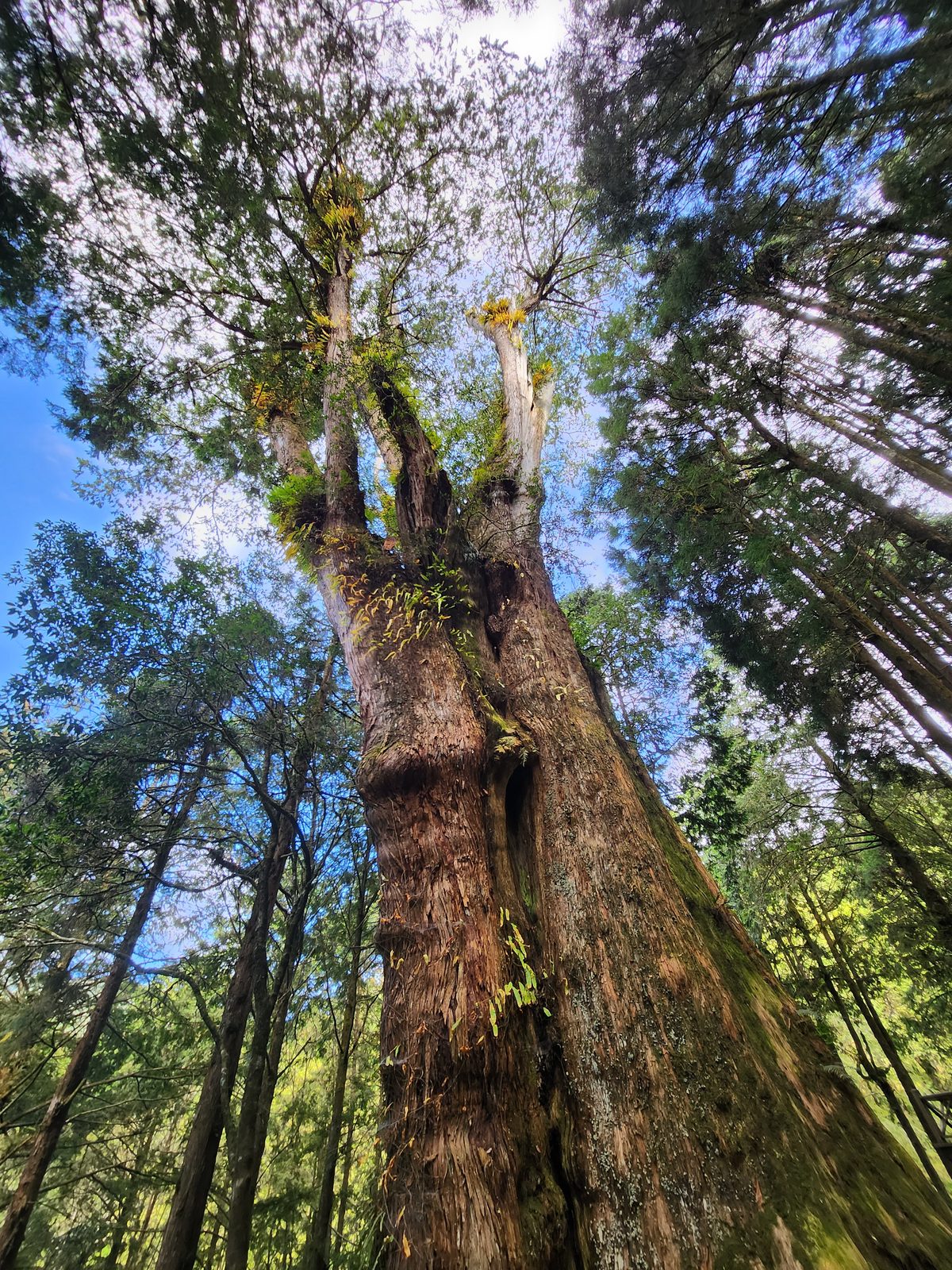
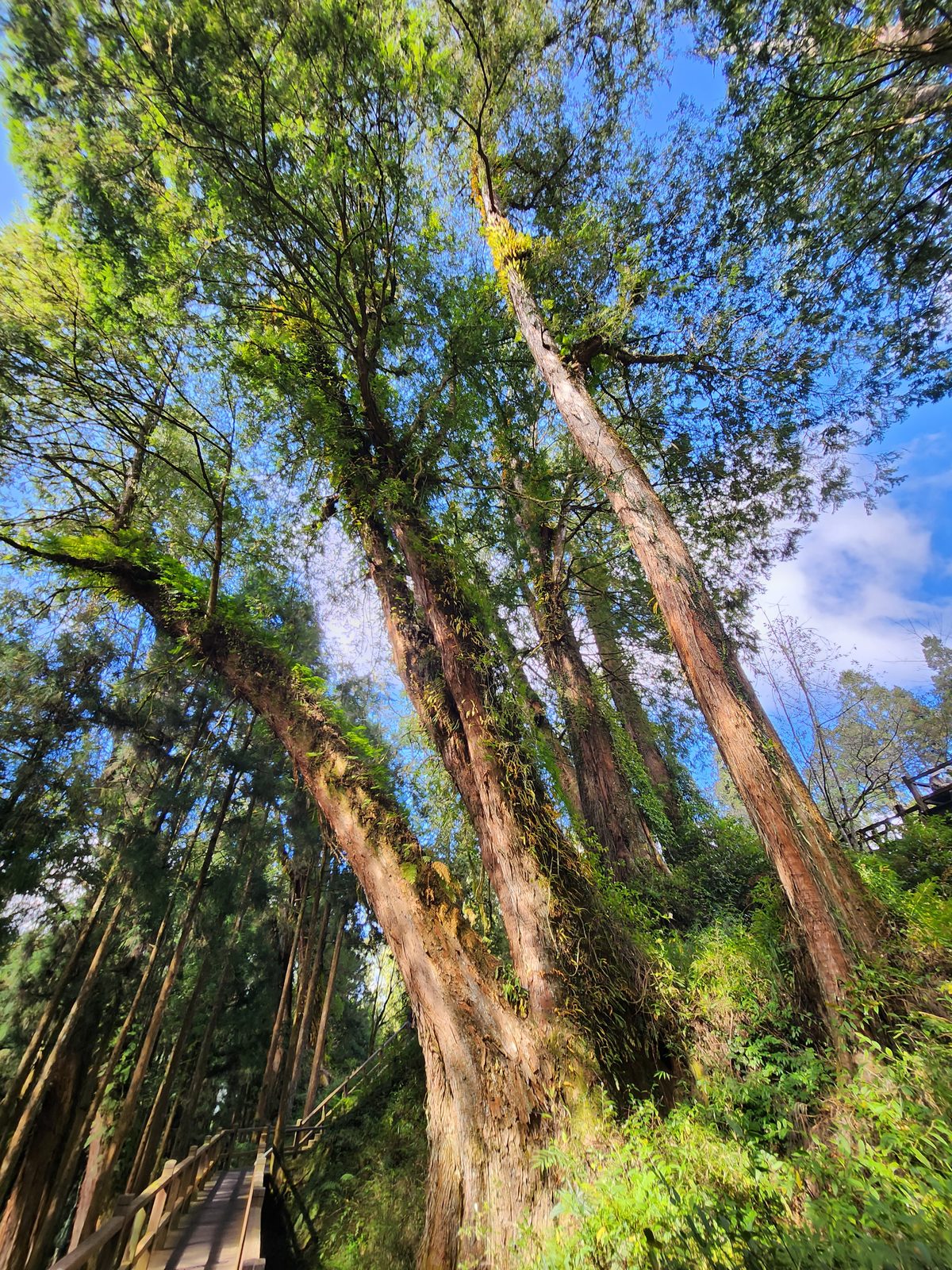
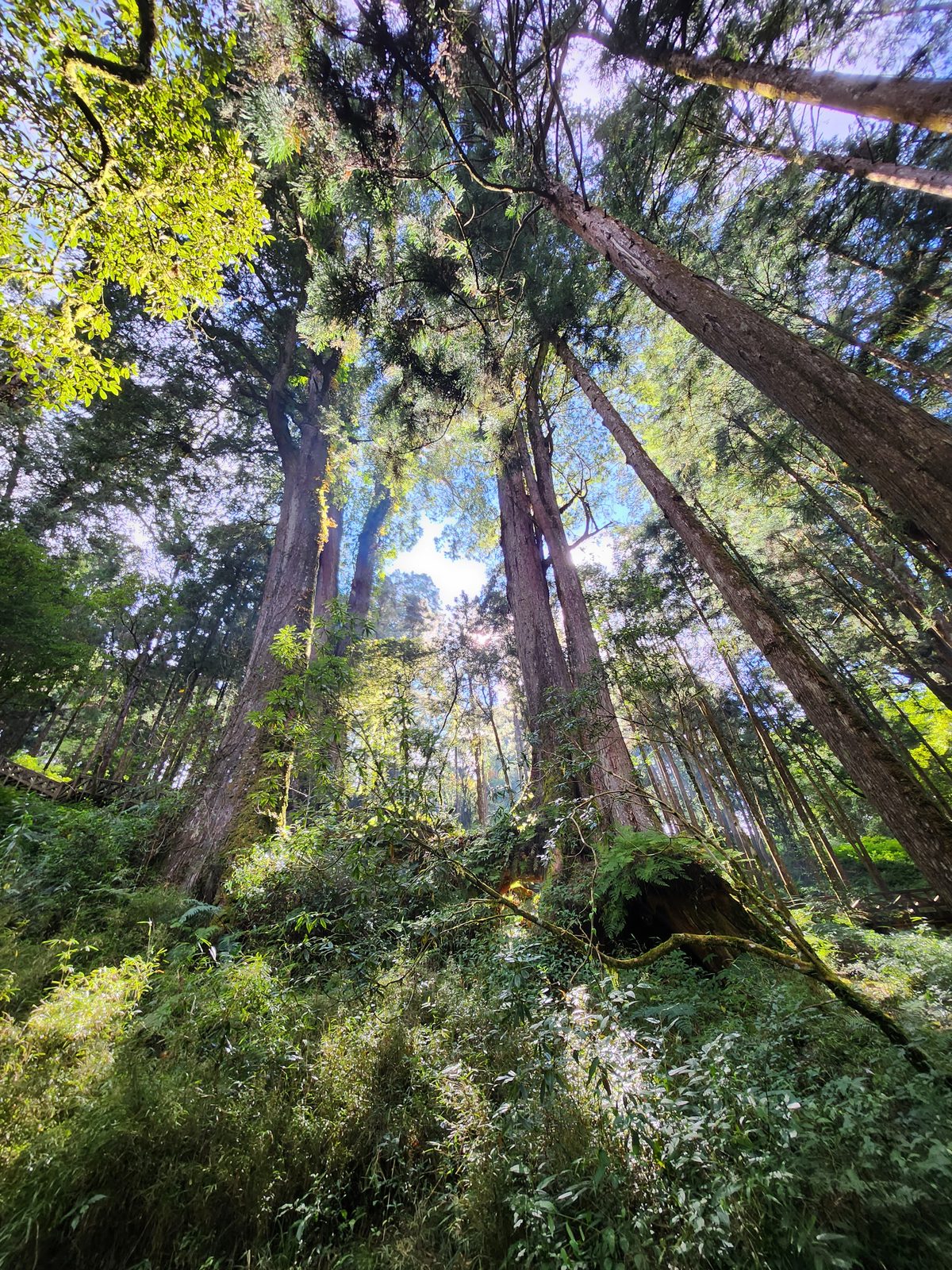
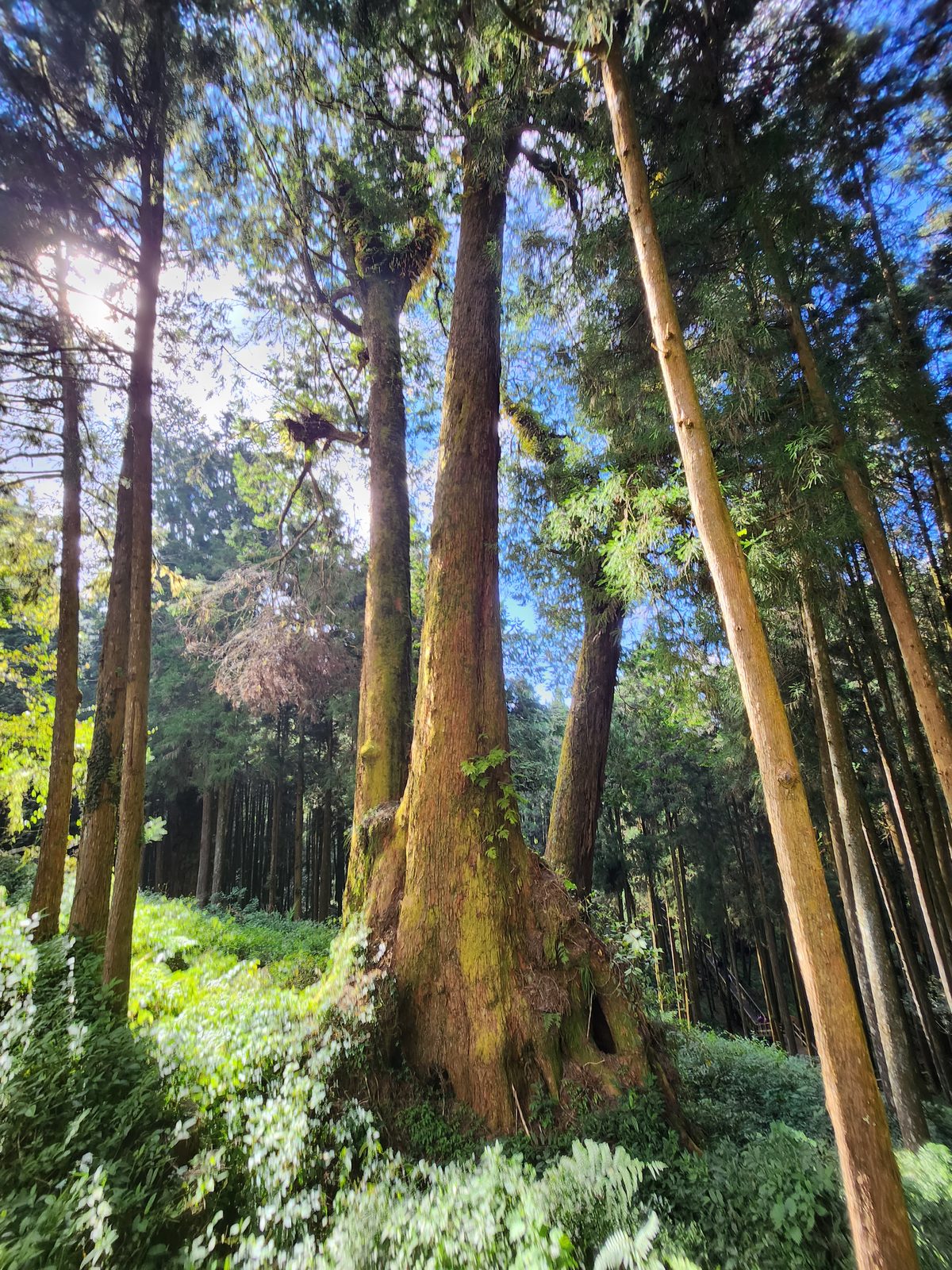
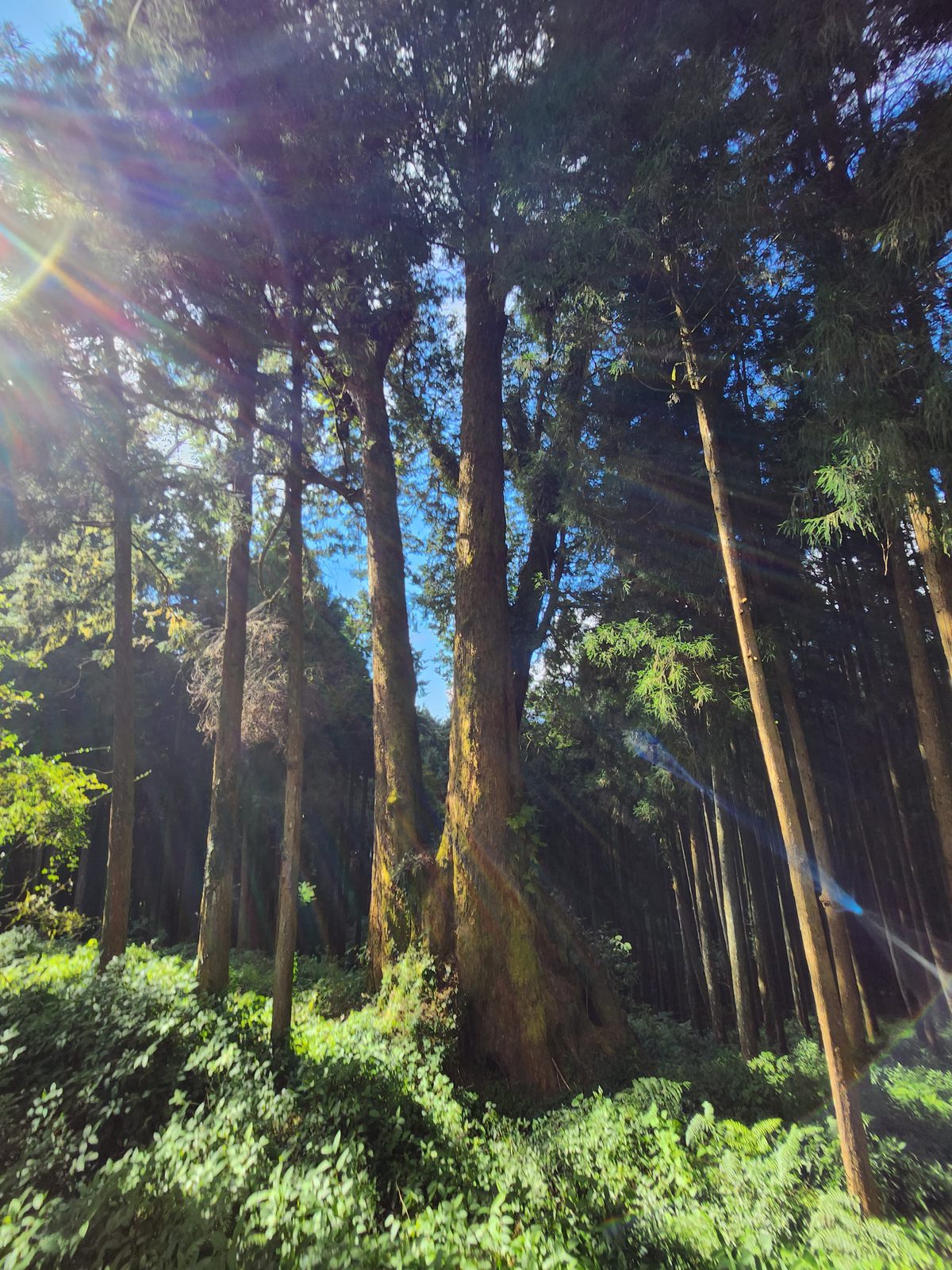
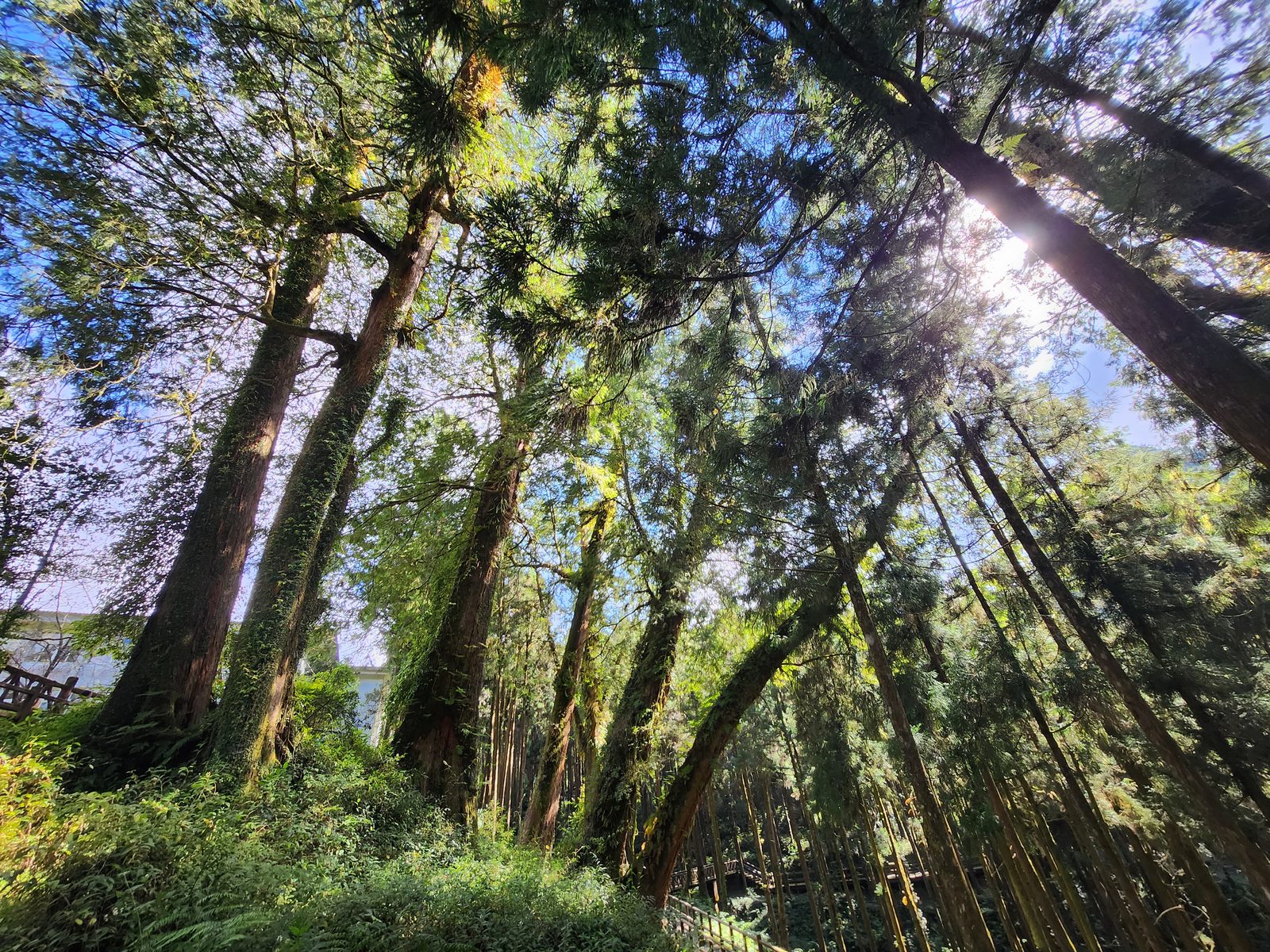
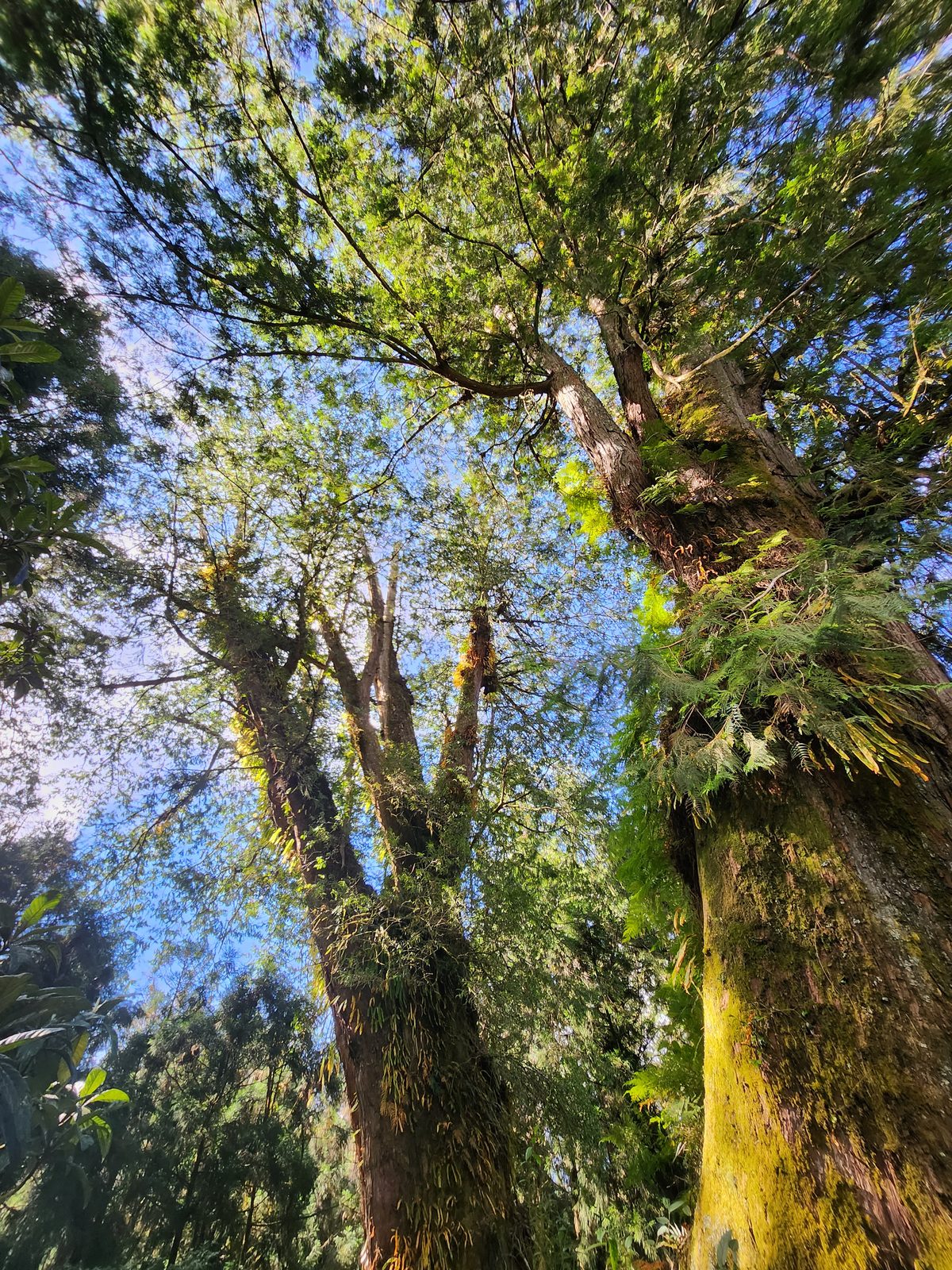
Step into the old forest and the picture changes completely: trunks so thick it would take several people to reach around them, bark covered in moss and epiphytic ferns, and some giants whose crowns broke off long ago, leaving a single standing stump that somehow carries even more presence.
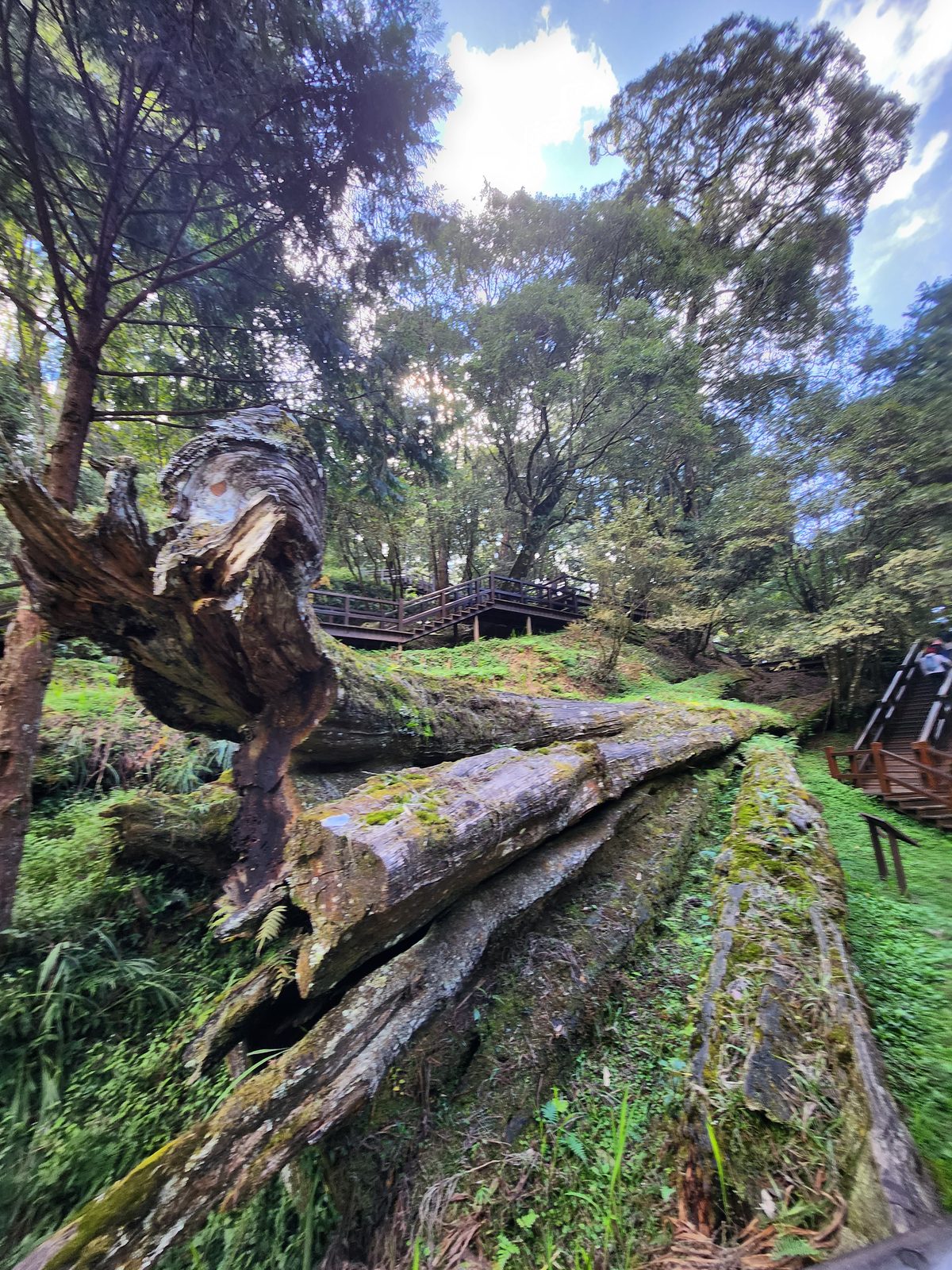
Fallen trees aren’t cleared away either. Enormous logs lie across the forest floor, thick with moss, the stone path running right past them as they slowly break back down into the forest — part of how the forest is managed here, and the thing most likely to stop you mid-walk.
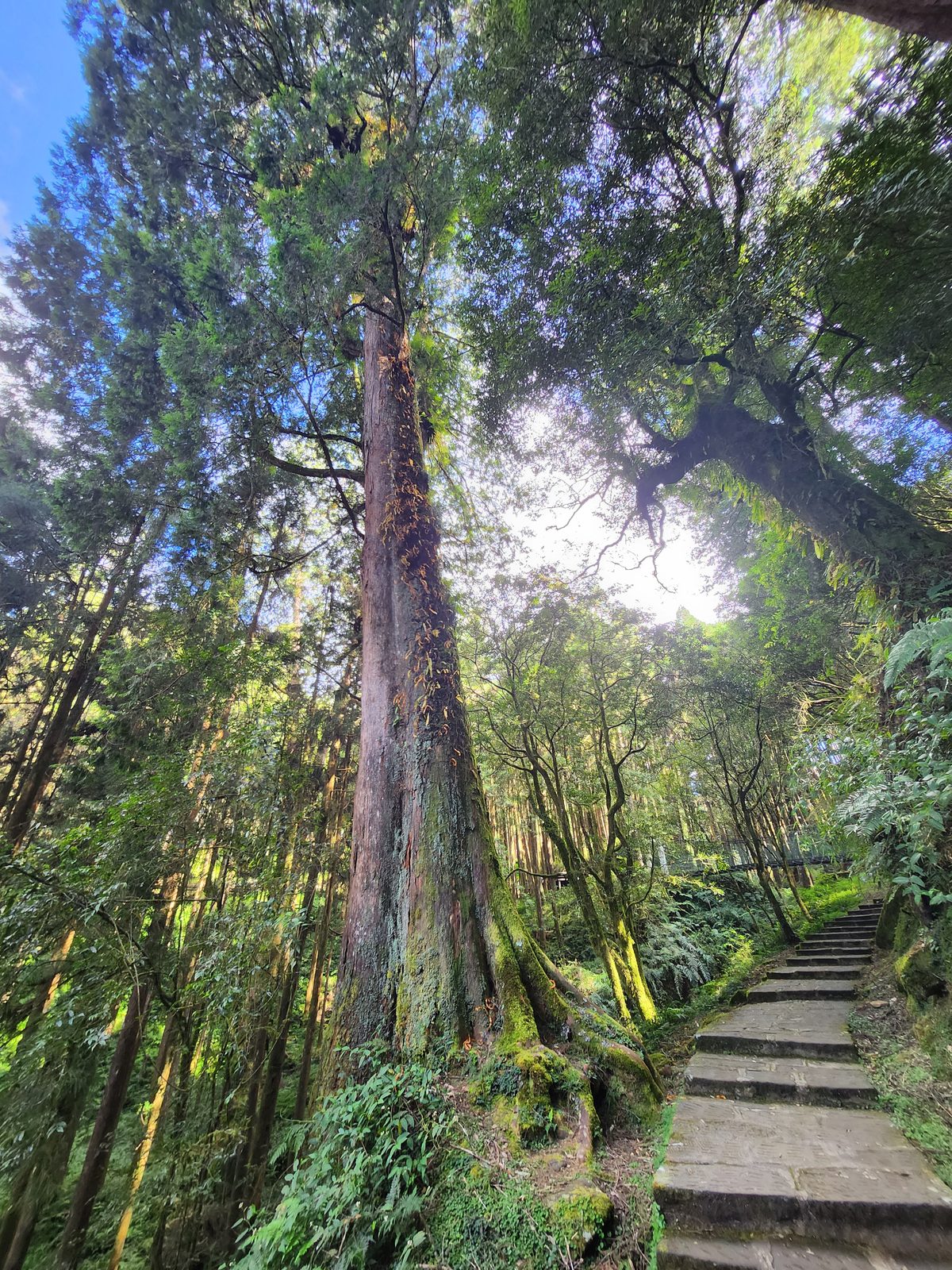
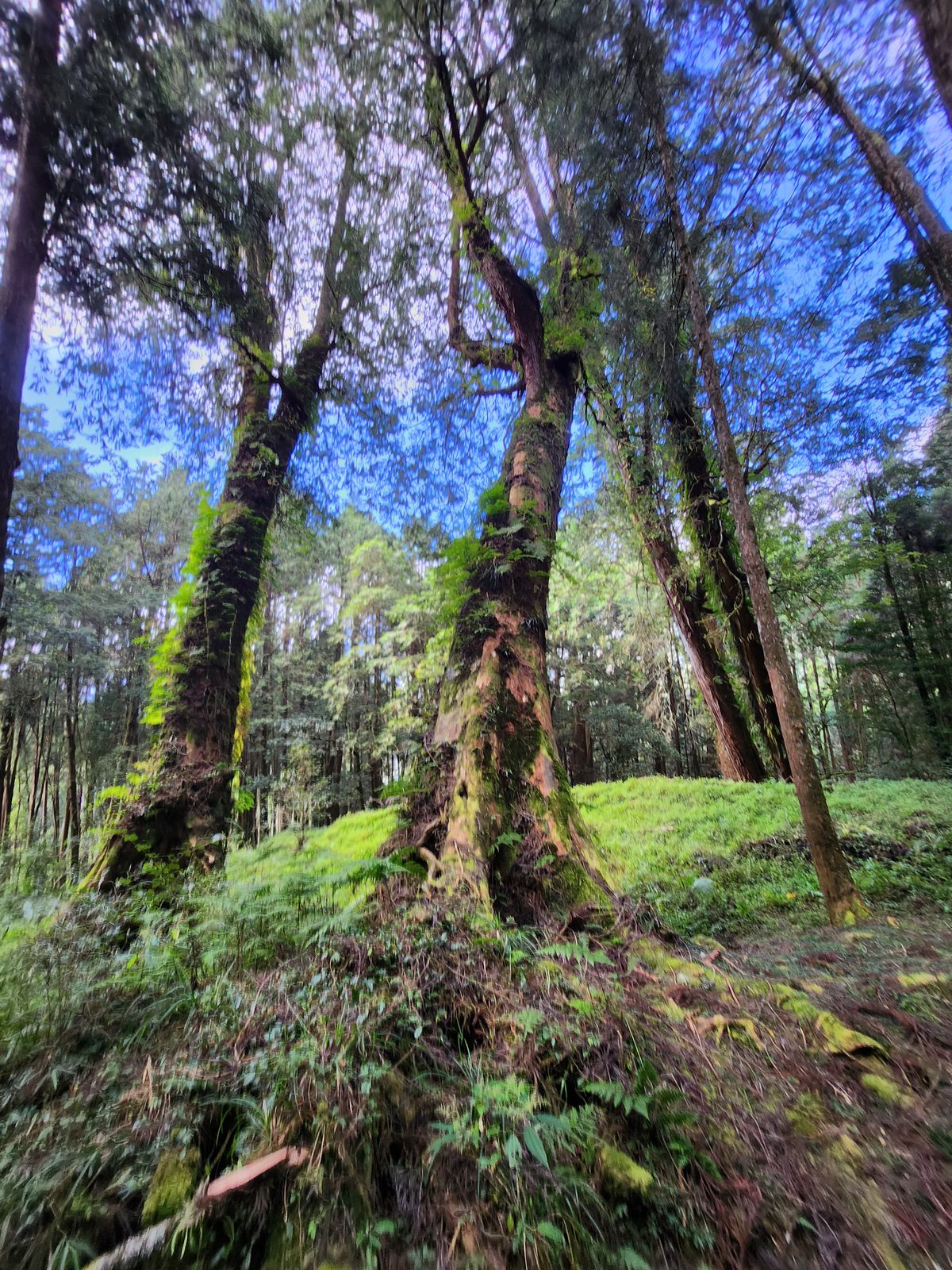
The boardwalks are worth looking at in their own right. Tiers of timber walkway and steps are built around the giant trees, some stretches raised to pass straight between one trunk and the next; put a person in the frame and you finally understand how big these trees are.
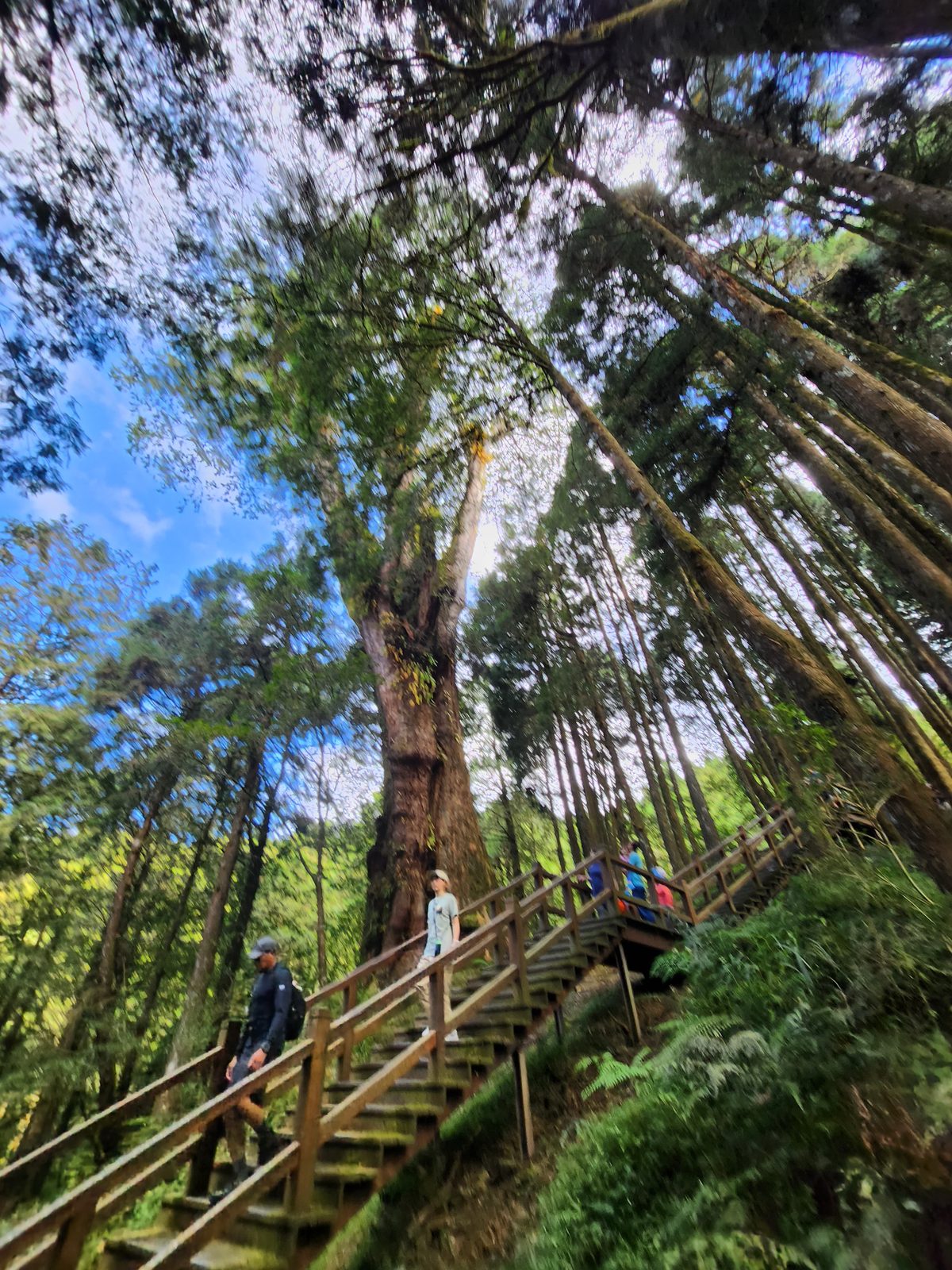
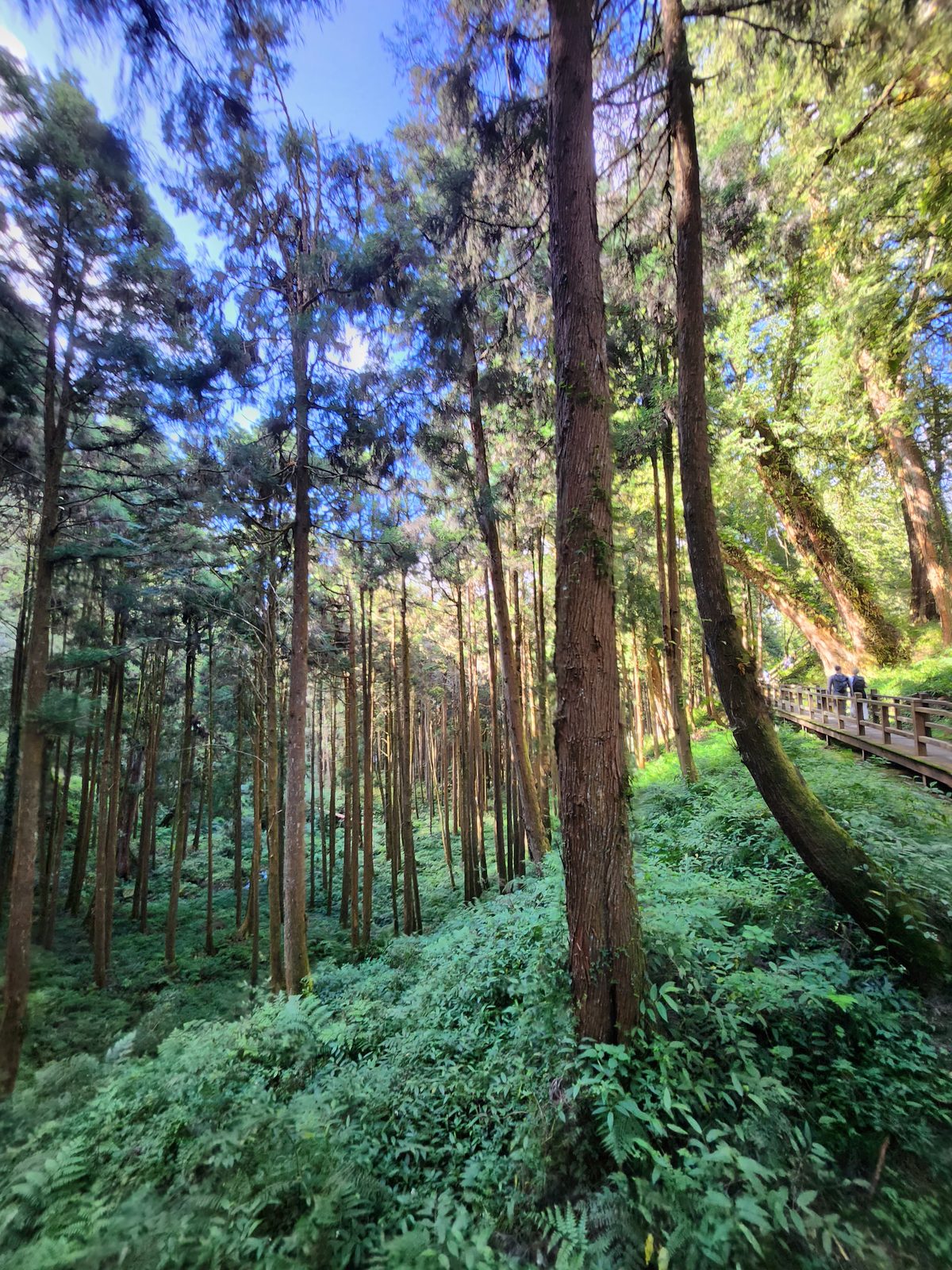
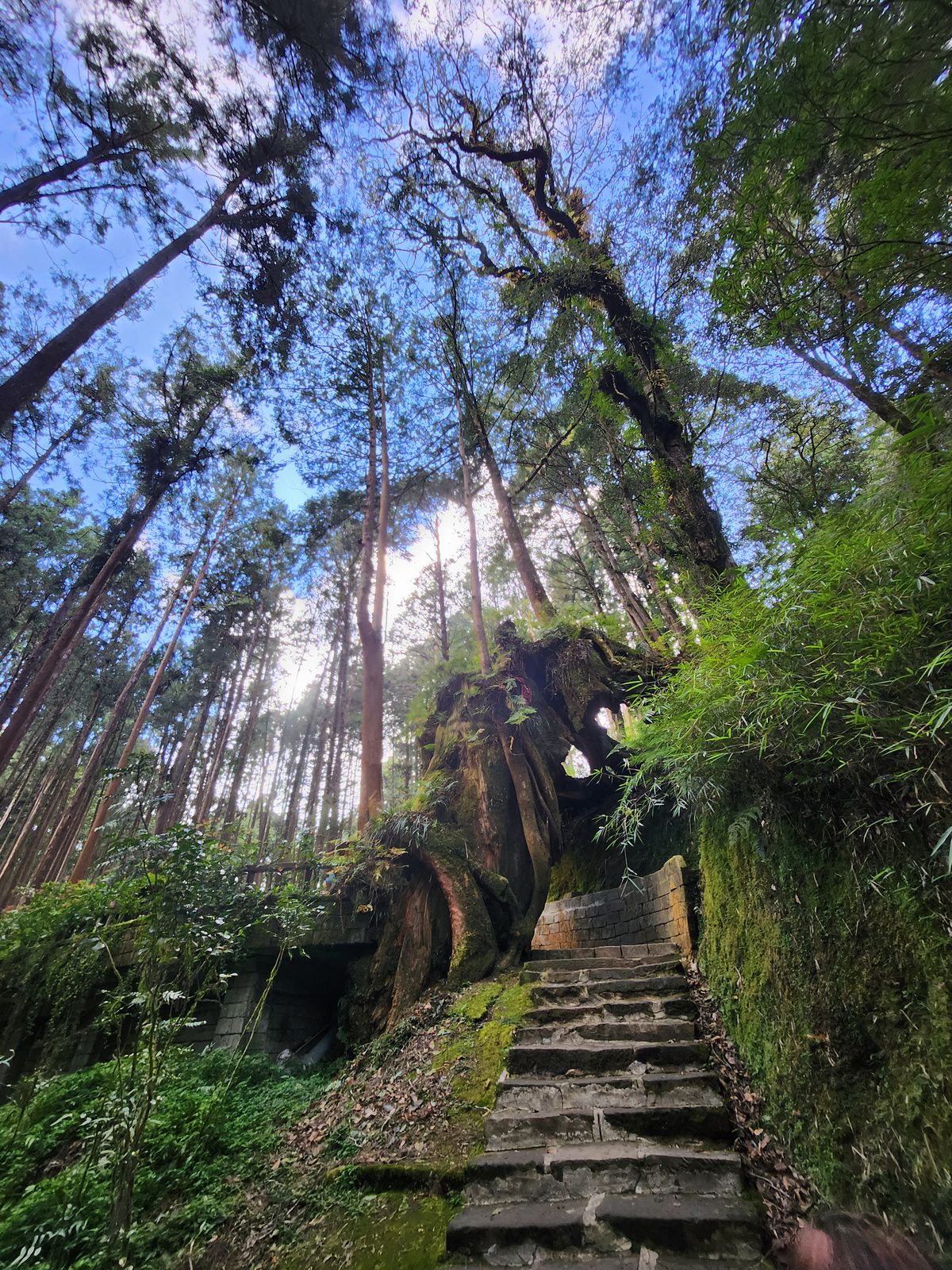
The light is part of the experience too. From morning through midday the sun cuts down between the crowns and the whole forest fills with beams; the small white flowers on the forest floor stand out especially well in that light.
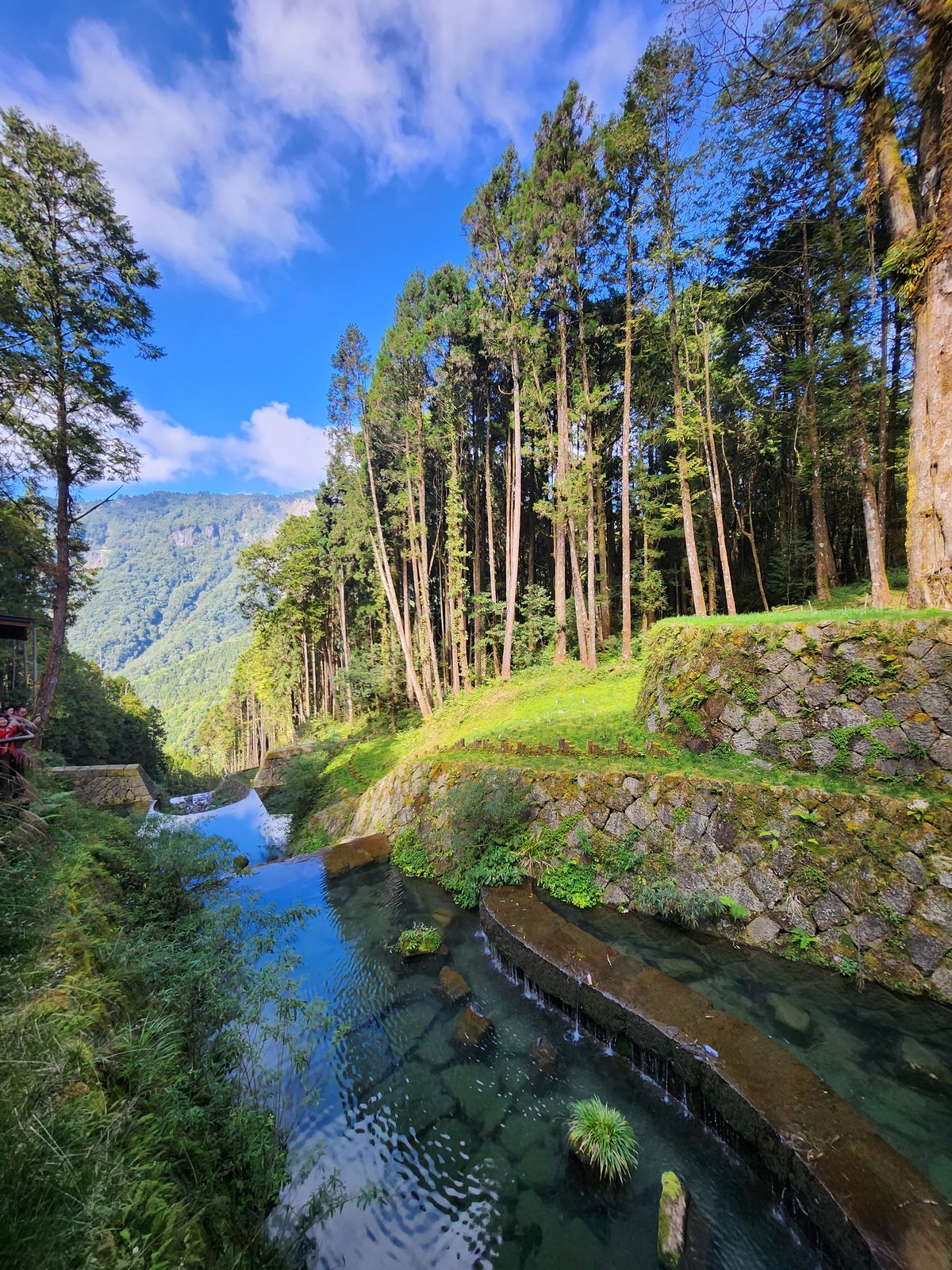
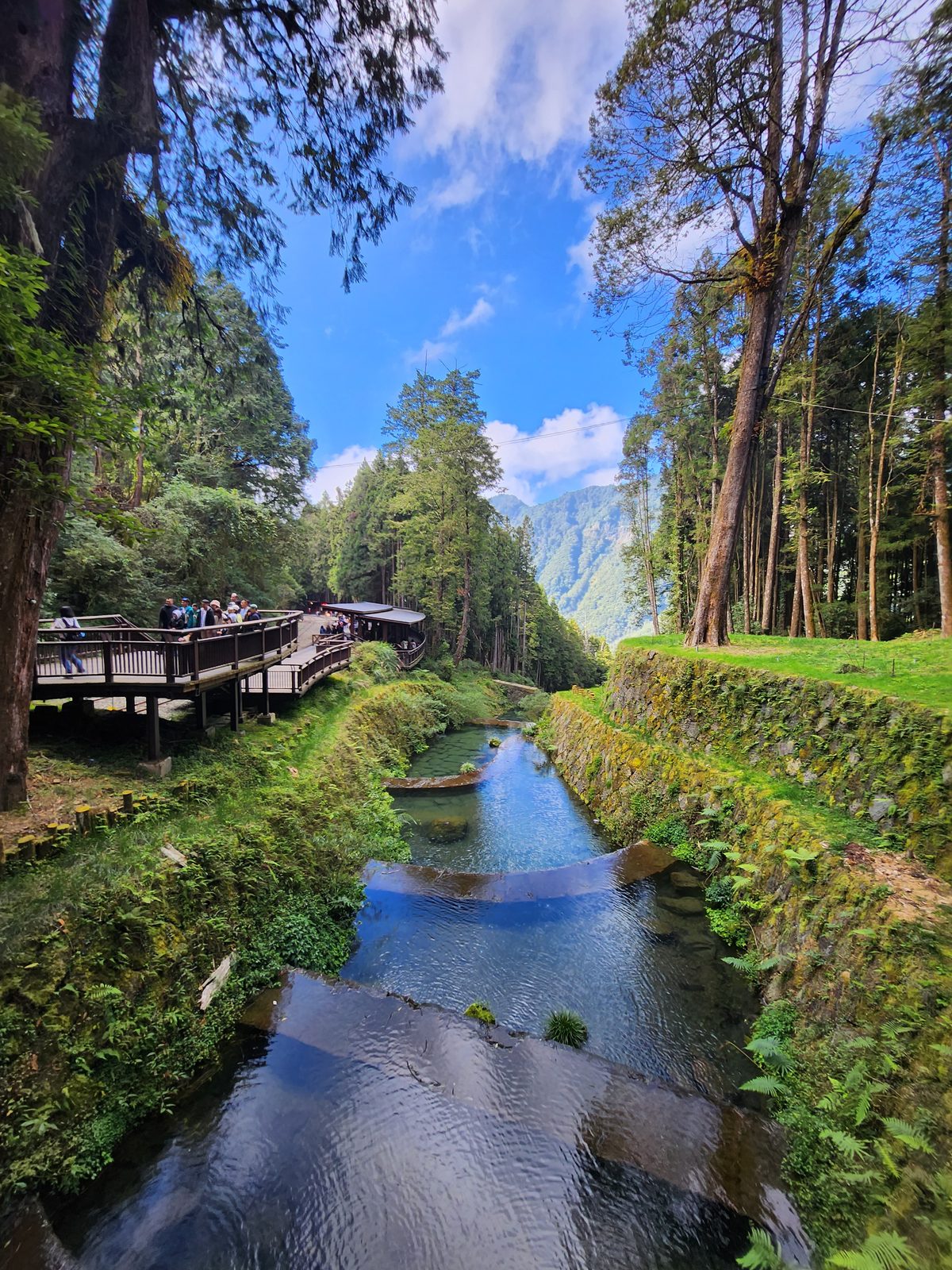
When your legs have had enough, there’s a pond in the park to sit by. The water takes the whole conifer forest and the blue sky into it, and with the timber boardwalk bridge crossing it and the ridges beyond, it’s the best photograph in the park. On a quiet moment you can barely hear another voice here.
The Fude Temple by the Trail and the One Old Tree with a Nameplate
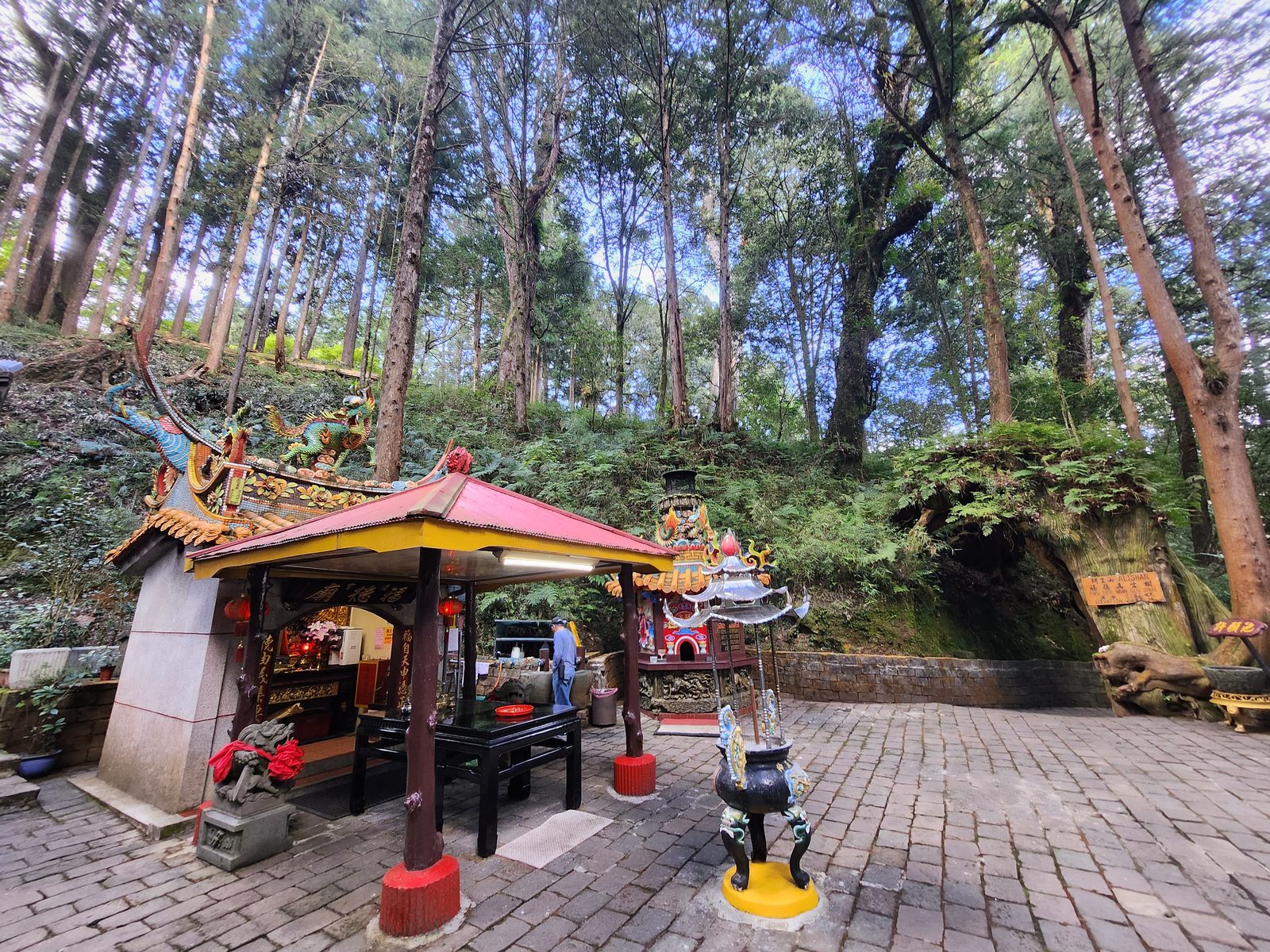
Walking through the giant trees you come across a small temple, Fude Temple written across the lintel, with stone lions, an incense burner and red lanterns out front and a painted furnace for spirit money alongside. What’s really unusual is the standing giant stump beside it — it carries an orange wooden plate reading “阿里山 福德萬古樹 FWU DER WANN GUU SHUH”, along with the elevation.
Worth pausing here to read the name and the elevation on the plate, and worth reading the couplet either side of the temple door while you’re at it.
Stocking Up on the Mountain: There’s a 7-ELEVEN, at Mountain Prices
Plenty of people assume there’s nothing up here, but the park has a 7-ELEVEN Shenmu store, with a timber shop sign over the door that makes it look rather unlike the usual branch. Hot food, drinks, rain ponchos, motion sickness tablets — it’s all there, and it’s a genuinely useful staging point.
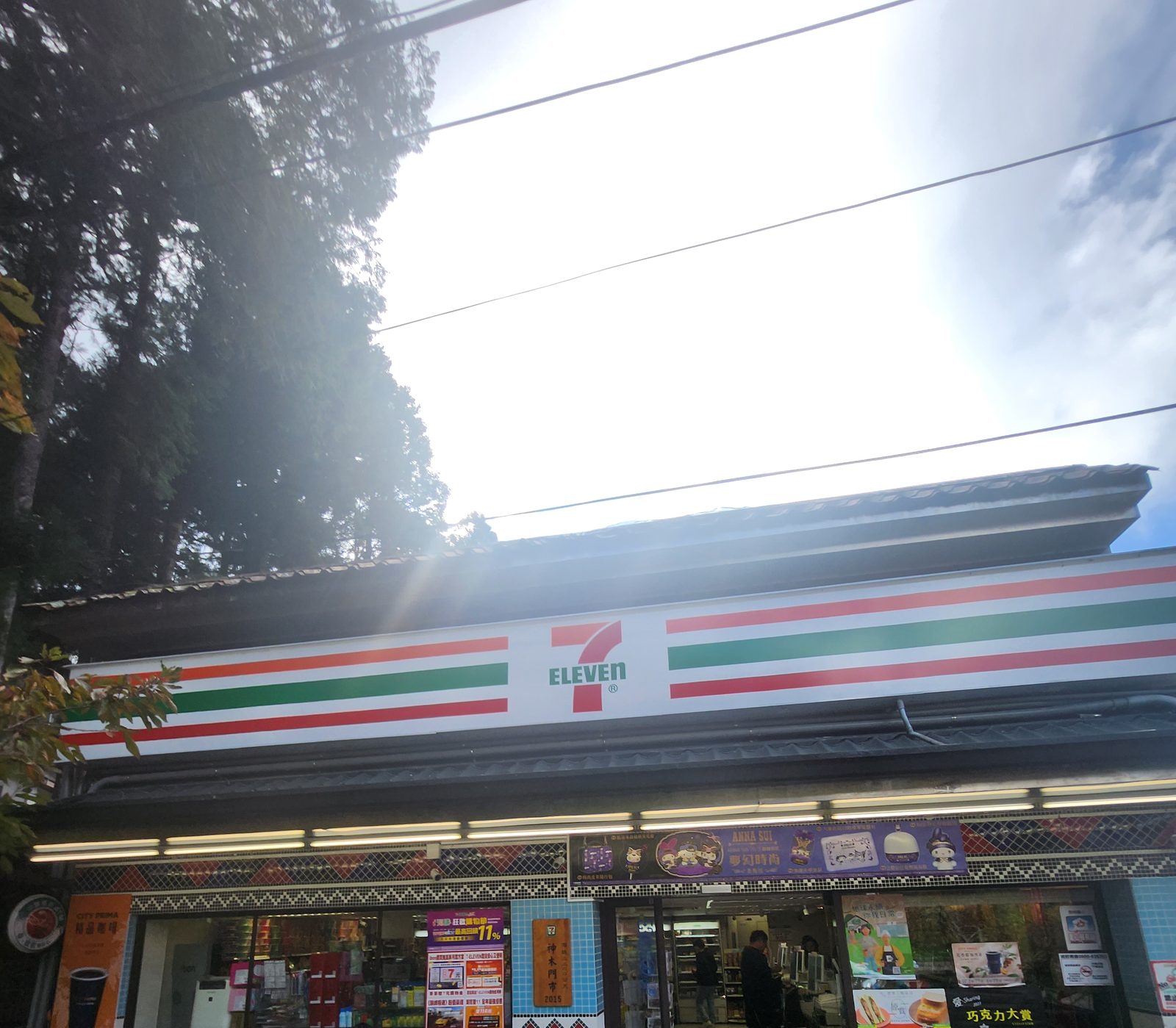
That said, mountain prices are mountain prices: the snack price tags on the shelf sit between NT$35 and NT$45, a little above what you’d pay on the plains (actual prices are as marked in store). If you really want to economize, carrying water and trail food up from below is the honest answer — but for anything you find yourself short of, this is still the most convenient place there is.

Getting Up the Mountain: How the Three Ways Compare
| Option | Who it suits | What to watch for |
|---|---|---|
| Driving yourself | Confident on mountain roads, wants total freedom | Provincial Highway 18 has endless bends and fogs up easily; park spaces fill fast at weekends |
| Bus or coach | Solo or in a pair, on a simple plan | Fixed departures, so get your return timing right; awkward with a lot of luggage |
| Private charter | Traveling with grandparents or kids, linking several stops and hotels | Needs arranging ahead; the driver takes the mountain road and you set how long you stay |
From downtown Chiayi or the HSR station, reckon on well over an hour of driving, on a road with plenty of bends that often fogs up in the afternoon. If you’re then going to walk the trails for several hours the same day, that drive costs more than you’d expect — which is exactly why so many people choose a charter, or stay a night.
If you’d like a night up here, Hotel Indigo Alishan along Provincial Highway 18 is the most talked-about option of recent years, with a rooftop infinity leisure pool and stargazing deck; the hotel also runs a shuttle to the forest recreation area and Fenqihu (book at the front desk). That piece has the full photo walkthrough.
Several GO TAIWAN itineraries pass through this area: the Cingjing, Sun Moon Lake & Alishan Unwind 3-Day Tour and the Taichung, Sun Moon Lake & Alishan Family 3-Day Tour, while the 7-Day Natural Wonders Round-Island Tour finishes on Alishan too. Coming up from the south, you can extend a Kaohsiung charter into the mountains.
How to Build the Day
- Half a day (not recommended, but doable): ride the Shenmu Line once, walk a short stretch of the giant tree trail and head back down. Fine if your schedule is jammed and you just want to have been.
- One day: arrive in the morning, buy your train ticket first, ride one leg up and walk the trails back, eat in the park at midday, then take the pond and the trails on the other side in the afternoon. This is the usual plan.
- Two days (with a night): walk the park slowly on the first afternoon, sleep on the mountain, then take the Zhushan Line at dawn for the sunrise and walk a stretch of trail on the way down. If you want the sunrise, you have to stay the night — coming up the same morning doesn’t work.
- To fit Alishan into a longer round-island route, the 6-day and 7-day comparison in How Many Days Do You Need to Circle Taiwan is a good next read.
A Few Things to Sort Out Before You Go
- Temperature: it’s a great deal cooler up here than on the plains, and the station board shows the live reading; bring a light jacket, and one more layer if you’re out for the sunrise.
- Slippery trails: stone steps and boardwalk get very slick after rain and there are warning signs on site — shoes matter more than anything else you bring.
- Stamina: lots of stairs and real altitude make this harder work than the same distance at sea level; with older travelers along, leave extra time to rest and don’t overpack the day.
- Train tickets: they sell out in high season, so buy first and sightsee after; Zhushan Line departures follow the sunrise and only go up the afternoon before.
- The last train: departures from Alishan Station run within a limited window, so settle your return timing early rather than discovering halfway through that there’s no train.
You can absolutely do Alishan under your own steam, but stringing Chiayi, Fenqihu, your hotel and whatever comes after the mountain into one route is a great deal easier with a charter. Tell a GO TAIWAN travel consultant your party size, dates and the places you’d like to see, and we’ll lay out each day’s driving for you. The five themed tour collections on the homepage are a good place to start if you’re still deciding on a pace.
FAQ
How much are tickets to the Alishan National Forest Recreation Area?
As published by the Forestry and Nature Conservation Agency, full admission is NT$300, NT$200 for Taiwanese visitors with ID, NT$150 concession (students and children aged 7–12, among others) and NT$10 preferential (children aged 3–6 and seniors 65 and over, among others); parking is NT$100 for a car. The park is open 24 hours a day all year, but every facility and railway branch line keeps its own operating hours. Prices and discounts are as officially published.
Which lines does the Alishan forest train run, and what do they cost?
The forest railway branch lines inside the park are the Zhushan Line, the Shenmu Line and the Zhaoping Line, all leaving from Alishan Station. As published by the Alishan Forest Railway and Cultural Heritage Office, a one-way full fare is NT$150 on the Zhushan Line, NT$100 on the Shenmu Line and NT$100 on the Zhaoping Line (concession fares are half). The Zhushan Line is the sunrise run, and its departure times shift with the day's sunrise, posted at the station and on the official website the previous afternoon.
How long do you need at Alishan? Is half a day enough?
Half a day works if all you do is ride the train once and walk one stretch of trail; but the park is large and much of the trail network is steps and boardwalk, so if you want to cover the giant trees, the pond and the main trails, give it a full day. And to see the sunrise you really do have to spend a night on the mountain.
How do you get up to Alishan without a car?
You can take a bus or coach up and then move around on the railway branch lines and on foot; if you're traveling with grandparents or kids, or want to link downtown Chiayi, Fenqihu and your hotel into one route, a private charter is by far the easiest, and your driver can adjust how long you linger to suit the day's energy and weather.
Are the Alishan trails easy? What do you need to bring?
The main trails are mostly boardwalk and stone steps, not especially steep but heavy on stairs and slippery after rain, with warning signs posted on site; wear shoes with decent grip, bring a light jacket (it is a great deal cooler up here than on the plains) and carry water.